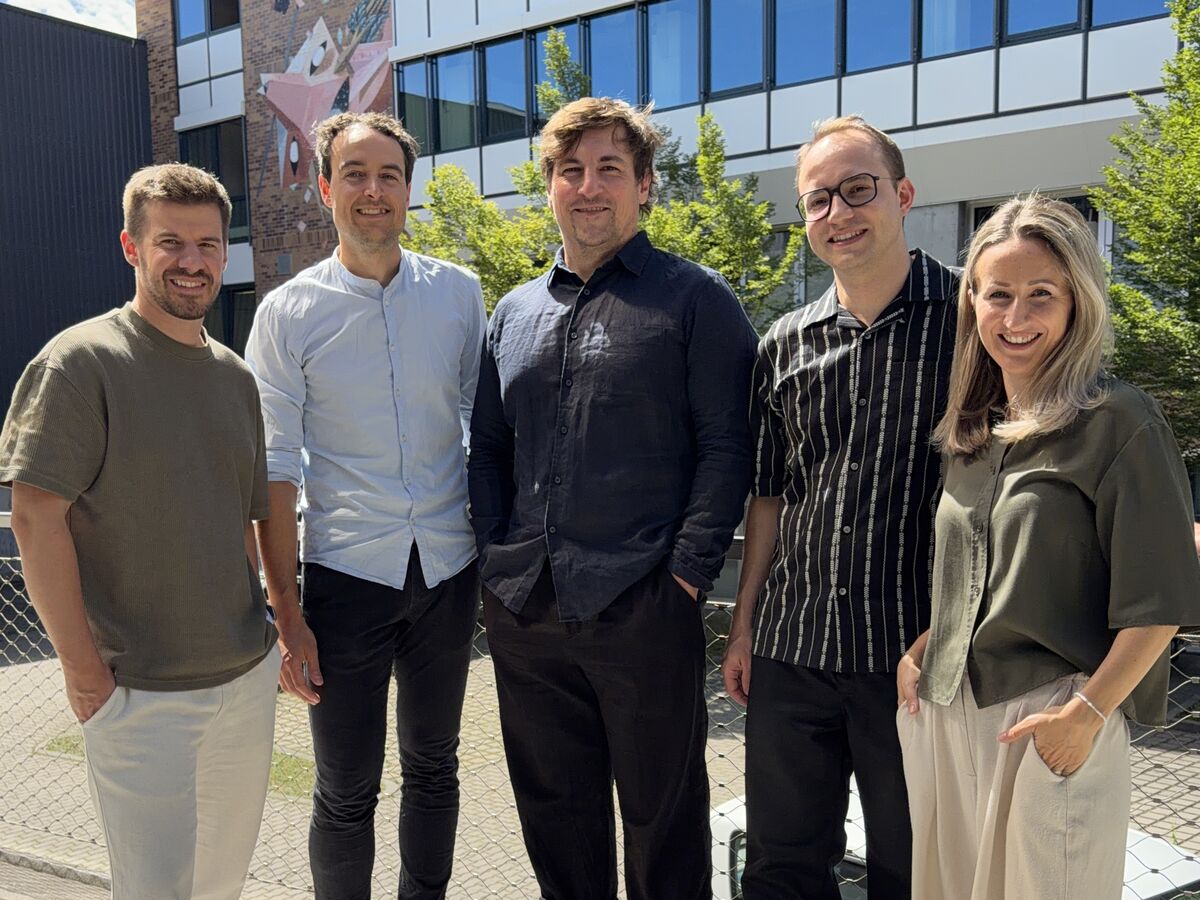
The founders behind Kumovis, the Munich-based PEEK 3D printing provider acquired by 3D Systems in 2022, have launched a new venture: Munich Medical Devices GmbH (MMD). Quietly established at the start of 2026, the company has just emerged from stealth mode with a clear ambition, to stop supplying the technology behind PEEK implants and start making the implants themselves.
MMD is led by four co-founders with deep roots in the material: Sebastian Pammer, Stefan Leonhardt, Arnaud Bruyas, and Yannick Krieger, all formerly of Kumovis. Announcing the launch, Leonhardt framed it as the natural next step after a decade spent on the printing side of the equation: “We spent a decade making PEEK printing possible. MMD is where that technology finally becomes the implant.”
From printing platform to finished implant
MMD’s opening product line will be cranial implants, offered both as patient-specific devices and in series production, a dual track the company says is possible thanks to a tightly integrated manufacturing approach.
Rather than porous structures being a side effect of the printing process, MMD is positioning porosity as the core design principle: implants built from a bioactive PEEK formulation, layer by layer, into what the company calls an interconnected lattice architecture. The structure is porous where bone growth needs it and solid where mechanical load demands it, with the material itself contributing properties the company markets as osteopromotive, radiolucent, and metal-free, meaning clinicians can track healing directly on imaging without the interference typical of metal implants.
The company describes its full production chain, design, printing, post-processing, cleaning, and release, as running under one roof and one quality system, layered with what it calls an AI-driven workflow spanning design, planning, and operations. That integration, MMD argues, is what lets a single patient-specific implant move through the pipeline with the efficiency of a production batch, addressing one of the longstanding cost and speed barriers to personalized implants.

A decade of PEEK groundwork
The founding team’s credentials in the material trace back to 2017, when Kumovis spun out of the Technical University of Munich to commercialize a 3D printing platform purpose-built for high-performance thermoplastics like PEEK. The startup’s fused layer manufacturing system, which paired integrated clean-room technology with a patented temperature-management setup, was designed to produce implant-grade parts dense and strong enough for surgical use. The technology drew early industry recognition, taking the top spot in Formnext‘s 2018 Start-Up Challenge before reaching market in 2019 with the Kumovis R1 printer.
That trajectory caught the attention of 3D Systems, which acquired Kumovis in 2022 and folded its platform into its medical device business as the EXT 220 MED. At the time, then-CEO Jeffrey Graves said the deal would pair Kumovis’s PEEK expertise with 3D Systems’ track record of bringing regulatory-cleared, personalized implantable devices to surgeons through its existing distribution channels.
From Toolmaker to Implant Maker
The gap MMD is closing is simple: the company that builds the printer rarely owns the implant. Kumovis spent a decade supplying machines and PEEK expertise to others, while the regulatory clearance, distribution, and hospital relationships stayed with whoever bought the platform. MMD flips that, design, printing, post-processing, and release under one roof, one quality systemm so the team that built the technology now keeps the value of the finished device.
That gap shows up directly in what happened to Kumovis’s own platform. 3D Systems’ EXT 220 MED, built on the Kumovis R1, became the engine behind the VSP PEEK Cranial Implant, cleared by the FDA in 2024. The hardware traces back to Kumovis; the implant and the hospital relationships belong to 3D Systems. It’s the exact split MMD’s founders are now trying to avoid by building their own company around it instead of selling the platform to one.
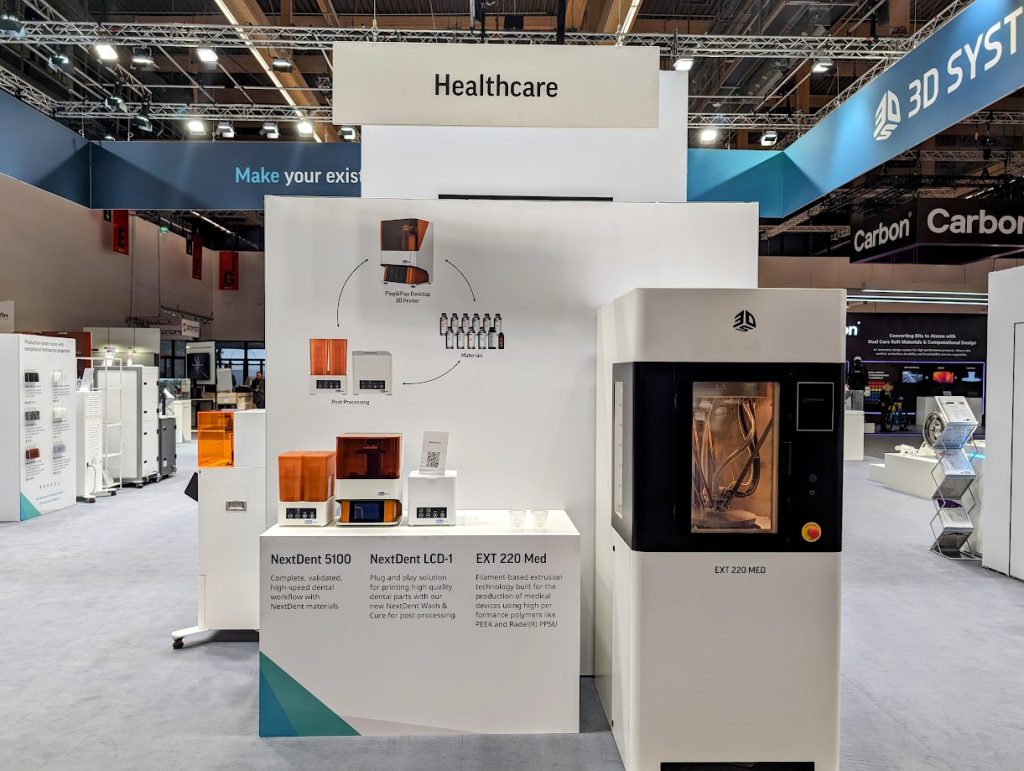
3D Systems itself has since tried to close that same gap a second way: cutting the outsourced manufacturer out entirely. The company has worked with hospitals on point-of-care implant production, printing MDR-compliant cranial implants inside hospital departments in Switzerland and Austria rather than shipping designs to an external plant. It’s a variation on the same bet MMD is making, that owning the full pipeline, not just one link in it, is what makes personalized implants fast and cheap enough to scale.
MMD is testing whether a small, founder-led team can make that bet work outside a large public company, using the same platform lineage, but keeping the whole chain, and its value, in-house from day one.
3D Printing Industry is inviting speakers for its 2026 Additive Manufacturing Applications (AMA) series, covering Energy, Healthcare, Automotive and Mobility, Aerospace, Space and Defense, and Software. Each online event focuses on real production deployments, qualification, and supply chain integration. Practitioners interested in contributing can complete the call for speakers form here.
To stay up to date with the latest 3D printing news, don’t forget to subscribe to the 3D Printing Industry newsletter or follow us on LinkedIn.
Explore the full Future of 3D Printing and Executive Survey series from 3D Printing Industry, featuring perspectives from CEOs, engineers, and industry leaders on the industrialization of additive manufacturing, 3D printing industry trends 2026, qualification, supply chains, and additive manufacturing industry analysis.
Featured image shows Munich Medical Devices team. Photo via Munich Medical Devices.