Amsterdam-based MX3D announced it has become the first wire arc additive manufacturing (WAAM) facility in the world to receive DNV certification at the Additive Manufacturing Criticality 3 (AMC3) level. AMC3 is the highest classification DNV awards. The certificate qualifies MX3D to produce highly critical metal components for maritime, defense, and energy applications.
DNV issued the Certificate of Qualification under the DNV-ST-B203 standard, which governs additive manufacturing of metallic parts. Reaching AMC3 means MX3D’s facility, software, and WAAM processes were audited and shown to consistently produce parts suitable for critical, high-load structural uses where component failure is not acceptable.
What AMC3 Covers
DNV, the independent risk management and quality assurance organization, uses AMC levels to grade how critical an additively manufactured part is and how rigorous its qualification must be.

MX3D reached it through extensive testing, material validation, and strict quality controls. The assessment covered the company’s robotic AM systems and its proprietary MetalXL software, which together make up its WAAM production setup. WAAM, also called arc-based directed energy deposition (DED-Arc), uses an electric arc to melt metal wire feedstock and build large parts layer by layer. Robotic arms give the process the reach for parts far larger than most powder-based systems can produce.
Dr. Sastry Kandukuri, Global Practice Lead on Additive Manufacturing at DNV’s Technology Centre in Oslo, Norway, confirmed that no other company has reached this level with the technology. “As the first company globally to achieve DNV certification at AMC 3 level for DED-Arc/WAAM technology, MX3D has demonstrated a strong commitment to quality, qualification excellence, and the industrial adoption of additive manufacturing,” he said. He added that DNV expects to keep working with MX3D as AM adoption grows across the energy, maritime, and industrial sectors.
Replacing Forging and Casting
For MX3D, the certification strengthens its position as a supplier of heavy-duty, large-scale metal parts and as a qualified alternative to conventional forging and casting. Those processes often depend on long lead times, tooling, and a shrinking set of suppliers. That is a problem for operators who need large replacement parts quickly.
“This confirms that our technology and processes meet the most stringent quality and safety standards required for producing highly critical metal parts,” said Gijs van der Velden, CEO of MX3D. “We have proven that our robotic 3D metal printing technology is not only highly efficient and scalable, but fully ready to serve industries where reliability is non-negotiable.”

Certification Becomes the Gatekeeper for Large-Format Metal AM
MX3D’s strategy depends on closing the gap between what WAAM can produce and what heavy industry is allowed to install. For safety-critical sectors, that gap is certification, and MX3D has been working toward it for years. In earlier work, Lloyd’s Register aided MX3D with the certification process for its 3D printed WAAM pipeline clamp. The AMC3 certificate moves from qualifying single parts to qualifying the whole facility.
Other WAAM producers are pursuing class approval from different angles. DEEP Manufacturing has secured full DNV approval to produce pressure vessels for human occupancy, pressure hulls, and related equipment with WAAM. Unlike MX3D’s facility-wide qualification, that approval targets one product class. The company has since grown to two facilities running certified production around the clock.
Certification is also reaching individual parts. In Singapore, Mencast Marine received approval from Lloyd’s Register and the American Bureau of Shipping for a fully additively manufactured propeller, confirming its WAAM process meets class standards for marine use. With both approvals, Mencast can bid for work outside its home market.
With class approvals stacking up, WAAM’s open question is shifting from whether its parts can pass inspection to who can deliver them at scale. MX3D now holds the top credential to compete.
Register now for AMA: Software 2026. Join 3D Printing Industry on 22 October for expert presentations, panel discussions and live audience Q&A exploring the software shaping additive manufacturing. [Register here.]
To stay up to date with the latest 3D printing news, don’t forget to subscribe to the 3D Printing Industry newsletter or follow us on LinkedIn.
Explore the full Future of 3D Printing and Executive Survey series from 3D Printing Industry, featuring perspectives from CEOs, engineers, and industry leaders on the industrialization of additive manufacturing, 3D printing industry trends 2026, qualification, supply chains, and additive manufacturing industry analysis.
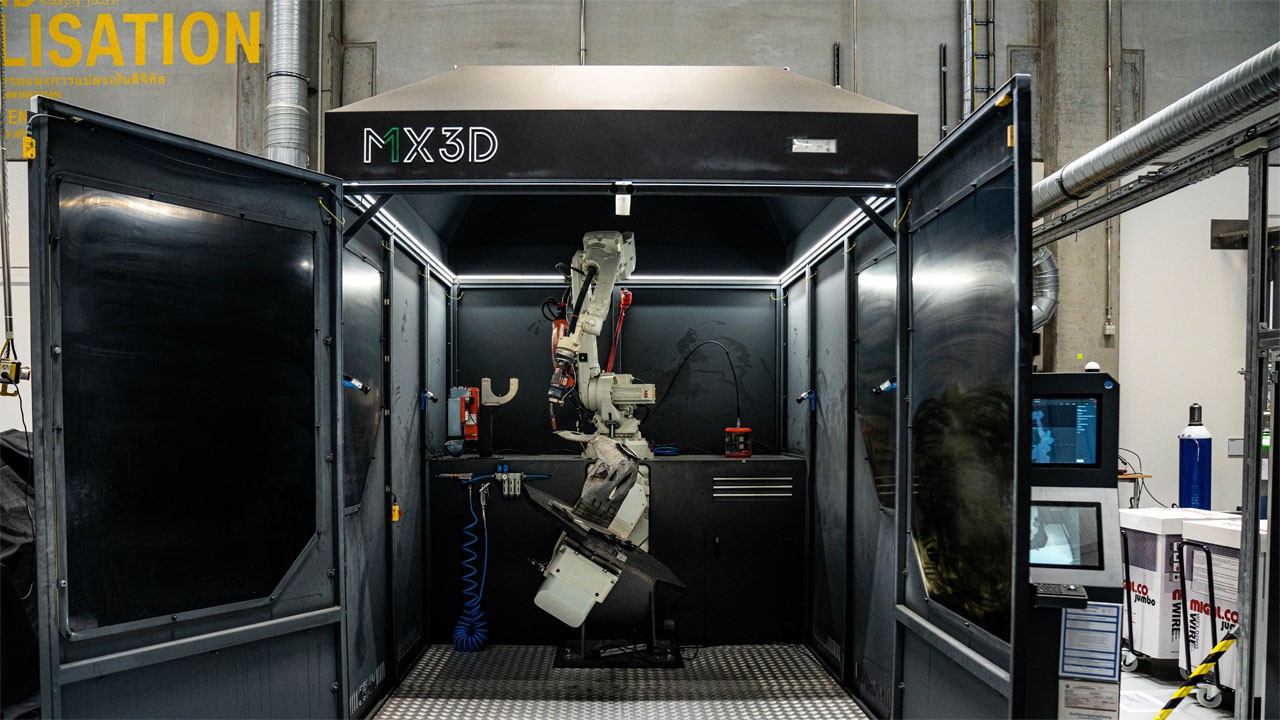
Featured image shows MX3D Printer. Photo via BMW.