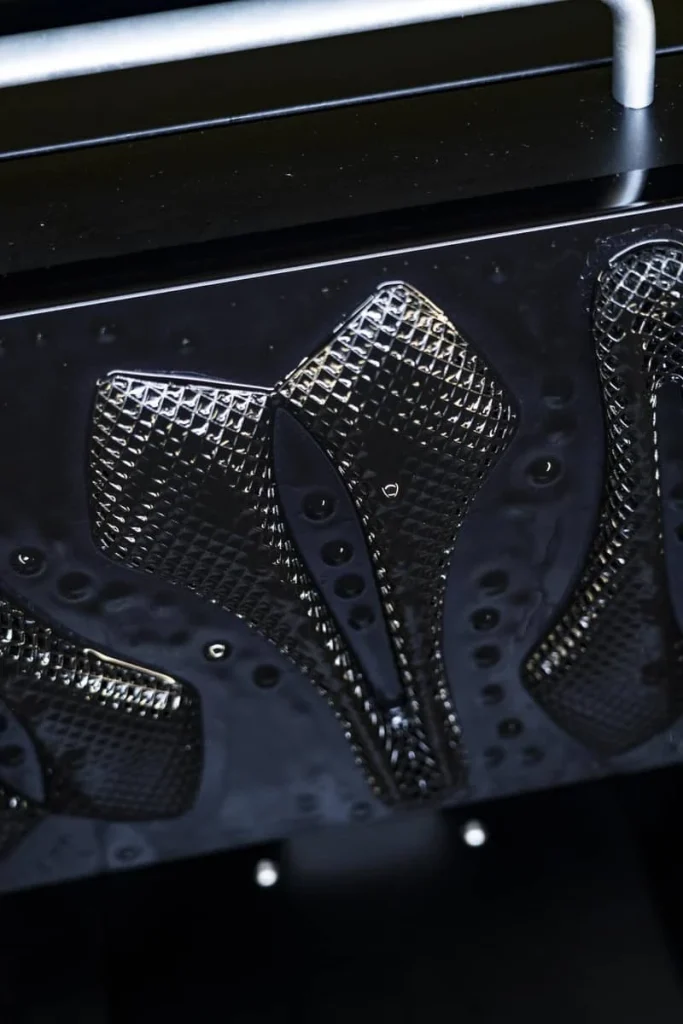
Selle Italia has introduced Unica, a 3D printed saddle built around pressure data collected from each individual rider instead of a fixed set of cushioning zones. The saddle is available on two existing shapes, the SLR 3D and the Novus Boost Evo 3D, each offered with a choice of Carbon or Elite rails.
Building the Saddle Around Rider-Specific Pressure Data
The process begins with the idmatch pressure mapping system, which records where and how a rider’s weight is distributed on the saddle. That data is then used to engineer an internal lattice structure specific to the individual, a than applying one of several predefined padding patterns as is common with other 3D printed saddles on the market. The external shape of the saddle stays the same as the selected base model; only the internal cushioning geometry is built around the rider’s measured pressure distribution.
Selle Italia says the goal is to reduce pressure concentration and improve stability at the saddle’s main contact point, which the company argues helps riders hold an efficient position for longer periods.
Fit Changes and Who the Saddle Is For
According to the company, a change in bike or riding position does not automatically require a new Unica saddle. In most cases a bike fitter can adjust the saddle’s position on the existing bike to accommodate the new setup. A new pressure mapping session is only recommended if the change significantly alters the rider’s pressure distribution.
Selle Italia positions Unica as suitable for riders at any level, not only professional cyclists, framing the customization as based on individual anatomy and riding style as opposed to competitive tier.
Rider- and Patient-Specific Pressure Data Shaping Internal Structure
Selle Italia’s specific strategy with Unica is building the saddle’s internal cushioning structure from a given rider’s own measured pressure distribution, gathered through the idmatch system, instead of applying one of several predefined cushioning zones common to other 3D printed saddles.
German design firm DQBD took a closely aligned approach with its SAM saddle, using software mapping of pressure points and weight distribution to match the saddle’s geometry to each rider’s body. The product category matches directly, and so does the underlying mechanism: an individual’s own pressure readings, not a standard template, determine the internal structure.
Back in 2014, Materialise applied a related logic to a different product through its RSPrint joint venture, using dynamic pressure measurements from RSscan’s Footscan hardware to shape a customized 3D printed insole for each patient. The product differs from a saddle, but the mechanism, an internal structure built from an individual’s own pressure data, not a shape-only or predefined fit, matches Selle Italia’s approach.
3D Printing Industry is inviting speakers for its 2026 Additive Manufacturing Applications (AMA) series, covering Energy, Healthcare, Automotive and Mobility, Aerospace, Space and Defense, and Software. Each online event focuses on real production deployments, qualification, and supply chain integration. Practitioners interested in contributing can complete the call for speakers form here.
To stay up to date with the latest 3D printing news, don’t forget to subscribe to the 3D Printing Industry newsletter or follow us on LinkedIn.
Explore the full Future of 3D Printing and Executive Survey series from 3D Printing Industry, featuring perspectives from CEOs, engineers, and industry leaders on the industrialization of additive manufacturing, 3D printing industry trends 2026, qualification, supply chains, and additive manufacturing industry analysis.
Featured image shows Unica, 3D printed saddle. Photo via Selle Italia.