Heavy industry runs on rotating equipment, turbines, cement mills, rolling machinery, and when those systems stop, the financial impact is immediate. Bearings are the components that keep them turning, and for nearly three decades Italian manufacturer Eurobearings has been building them for original equipment manufacturers (OEMs) across energy, oil and gas, marine, defense, and heavy processing sectors worldwide from its base in Cortemaggiore, Italy.
The scale of these parts had long imposed hard limits: casting and machining from solid metal blocks was slow, generated material losses of up to 80 percent of initial stock, and offered no practical path to repairing worn components short of full replacement.
“We’ve moved from the limits in lead times and material waste that often traditional manufacturing presents, to being able to manufacture and repair large-scale components quicker and more efficiently than before,” stated the company.

A Robotic Cell Built for Oversized Industrial Reality
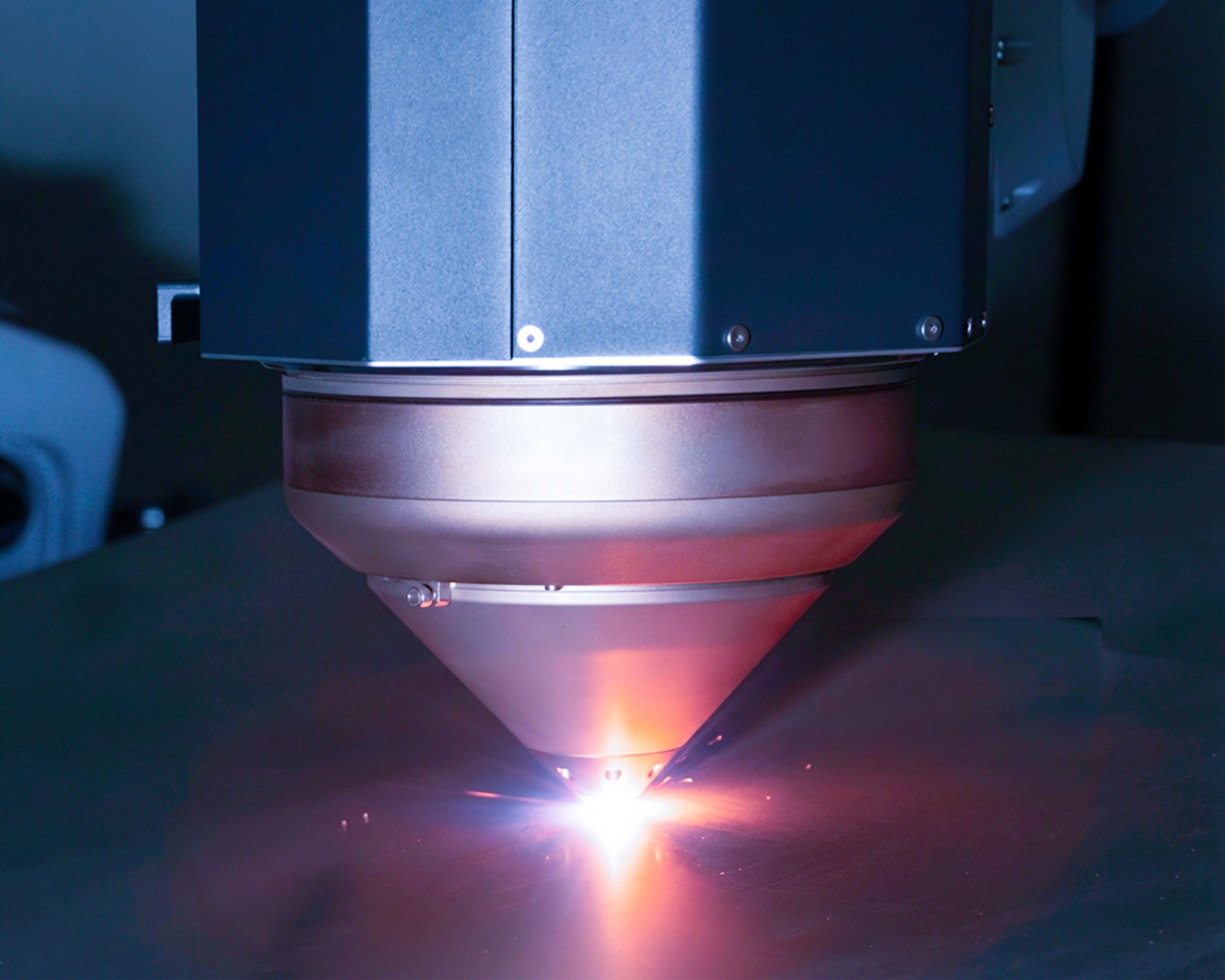
Eurobearings resolved this by deploying the Meltio Engine Robot Integration, using wire laser Directed Energy Deposition (DED) to apply white metal, commonly known as babbitt and other alloys directly onto parts. At the center of the setup sits a large-format KUKA industrial robot mounted on a mobile gantry, an arrangement that removes conventional print volume constraints and allows the deposition head to accommodate a wide range of part sizes and geometries without restriction.
The impact is measurable. Lead times dropped 30 to 50 percent on complex components, while near-net shape deposition sharply reduced raw material consumption, replacing a process that previously discarded up to 80 percent of initial stock. The Meltio Engine delivers a stable, industrial-grade deposition process with consistency across production runs, meeting the quality standards that energy-sector applications demand. Complex, oversized parts that would previously have required casting or multi-stage machining can now be manufactured or restored in a single integrated workflow.
Welding wire as feedstock generates less waste than subtractive methods, and the ability to deposit material directly onto worn parts eliminates the disposal burden that previously accompanied end-of-life components. For a company serving power generation, marine, and heavy processing markets, the reduction in material consumption is not incidental, it is structural, and it compounds across every component rehabilitated rather than scrapped.

Directed Energy Deposition and the Industrial Repair Opportunity
Eurobearings’ deployment of wire laser DED sits within a well-established and growing industrial logic. DED’s ability to deposit material directly onto pre-existing geometry, curved, worn, or irregular surfaces that flat-bed processes cannot reach, makes it the natural choice for large-scale industrial repair, restoring function without replacing the part at a fraction of the cost and lead time of conventional manufacturing.
The case studies are concrete. Enel deployed a DED 3D printer at its Santa Barbara metallurgy lab to repair impellers for its geothermal plants, restoring worn units layer by layer in what the company described as the first historic repair of a worn part in the sector, saving an estimated €70,000 per year and eliminating components that previously ended up in landfills.
In aerospace, Optomec’s LENS DED technology was awarded $500,000 to develop repair process for the U.S. Air Force turbine blades, depositing material directly onto existing parts to restore geometry and extend service life.
When a high-value rotating component wears beyond tolerance, the economics are difficult to argue against: targeted deposition bypasses casting and machining supply chains entirely, and returns the asset to service faster, a calculation that operators in energy, marine, and heavy processing can no longer ignore.
3D Printing Industry is inviting speakers for its 2026 Additive Manufacturing Applications (AMA) series, covering Energy, Healthcare, Automotive and Mobility, Aerospace, Space and Defense, and Software. Each online event focuses on real production deployments, qualification, and supply chain integration. Practitioners interested in contributing can complete the call for speakers form here.
To stay up to date with the latest 3D printing news, don’t forget to subscribe to the 3D Printing Industry newsletter or follow us on LinkedIn.
Explore the full Future of 3D Printing and Executive Survey series from 3D Printing Industry, featuring perspectives from CEOs, engineers, and industry leaders on the industrialization of additive manufacturing, 3D printing industry trends 2026, qualification, supply chains, and additive manufacturing industry analysis.
Featured image shows Meltio’s metal 3D printing technology. Image via Meltio.