

Plan B is a a new open source, powder based, inkjet 3D printer employing a process similar in nature to the original ZCorpoation tech, called “three dimensional printing”. This process uses an inkjet nozzle that “prints” the pattern on a thin layer of powder with a liquid binding agent to hold everything together as each layer is formed.
The Plan B 3D printer was created by 22 year old engineer Yvo de Haas who constructed it out of standard 3D printer parts, off the shelf inkjet printer components and a laser cut aluminium frame. This 3DP process was invented over twenty years ago, however it was only ever adapted for professional and industrial uses, with the relevant patents, and in a now familiar story, remained prohibitively expensive. Until de Haas built his open sourced version for about $1,300 that is.
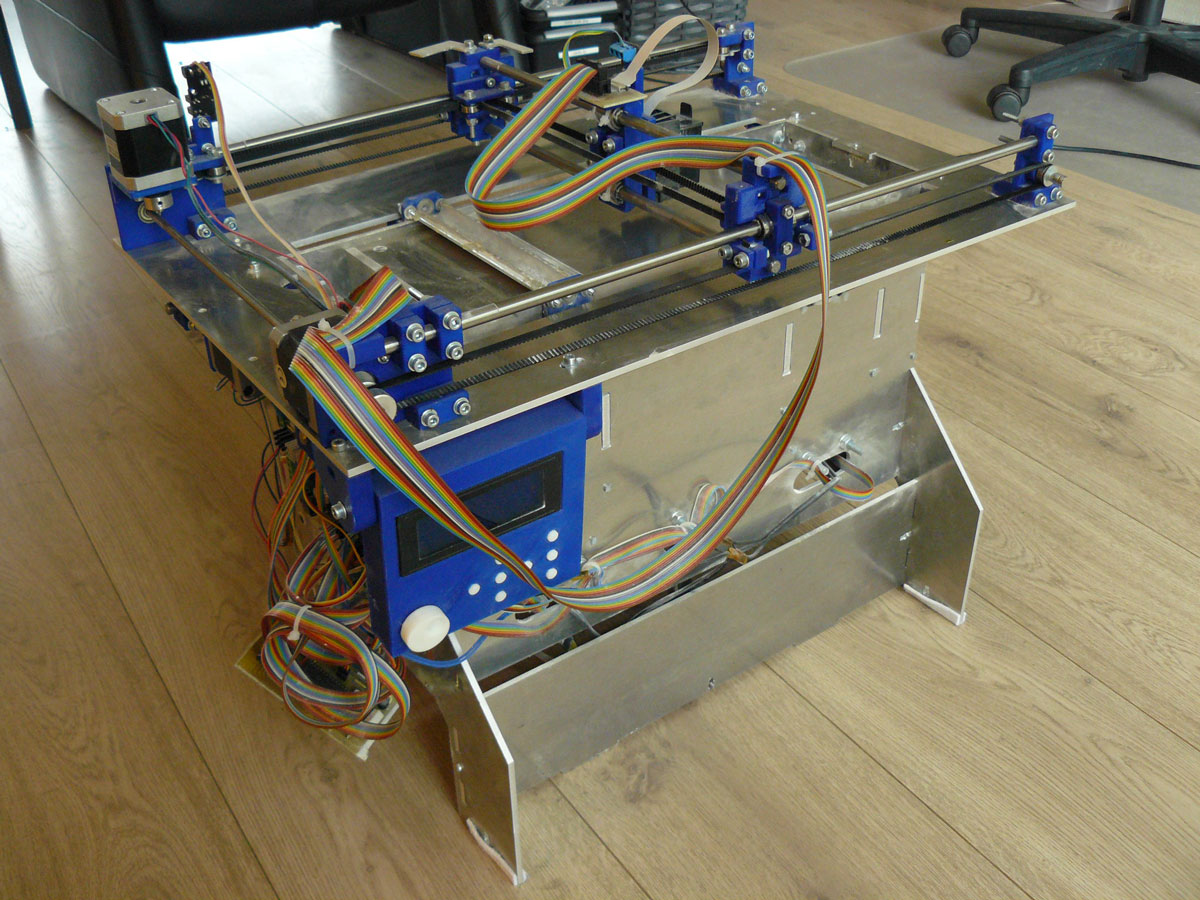
Three Dimensional Printing uses a modified inkjet printer cartridge to deposit a bonding agent onto the powder printing material. The powder material is stored in hoppers on each side of the printing bed. As the inkjet nozzle deposits the pattern on the layer of printing material, the printing bed slightly lowers, causing the powder on the side to rise up slightly above the bed. This allows the printer to smooth a new layer of printing material on top of the old layer. The process is simply repeated until the object is complete.
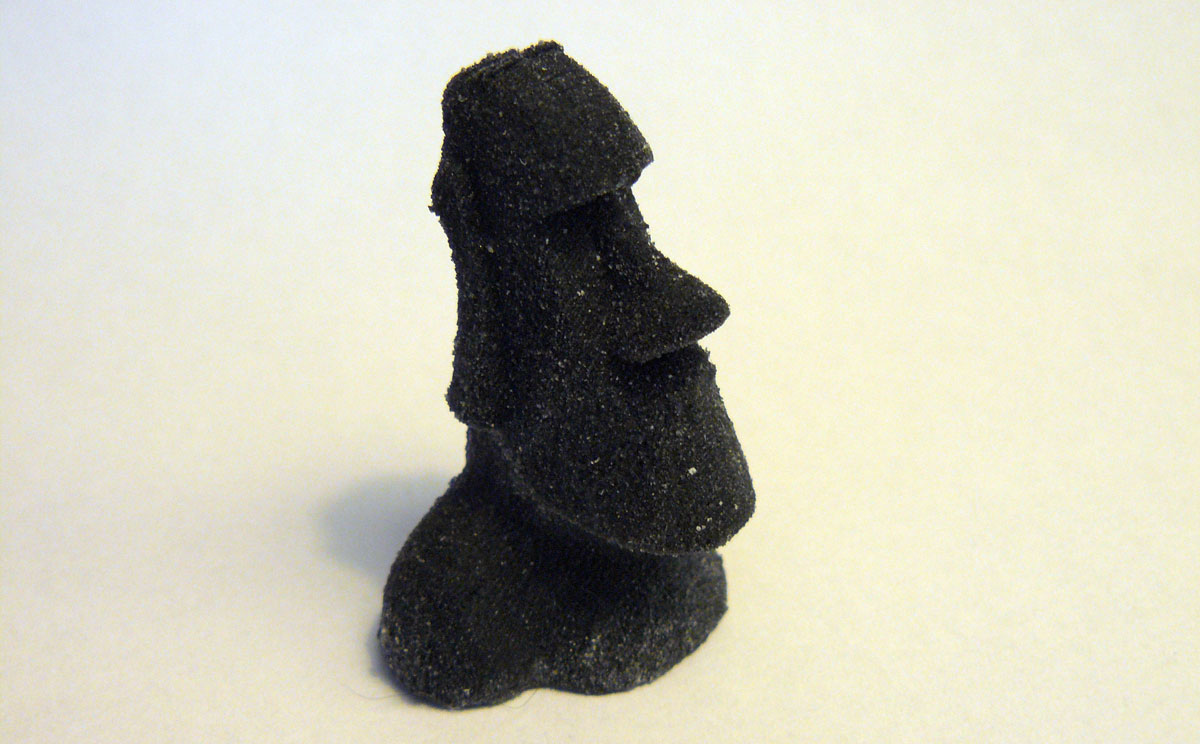
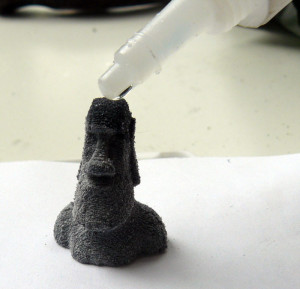 At this point the parts are only lightly bonded together and will need to be cured or hardened. Since the parts are still quite fragile de Haas suggests using compressed air to remove the excess printing material. How the material is hardened depends on what material you used during the printing process. He used a gypsum powder so de Haas applied super glue to the model in order to cure it. Currently the Plan B is only capable of printing in a single color, but de Haas is planning on updating the printer with multiple inkjet nozzles so multi-color prints will be an option.
Here is a video of the Plan B in action:
The Plan B is capable of printing with a resolution of .26mm and because your 3D model is printed in layers of powder it requires no support material. All excess material can be reused once the model has been removed from it. Currently the Plan B is only capable of printing in gypsum powder, however de Haas is experimenting with expanding into different types of materials including ceramics, graphite powders and even confectioners sugar.
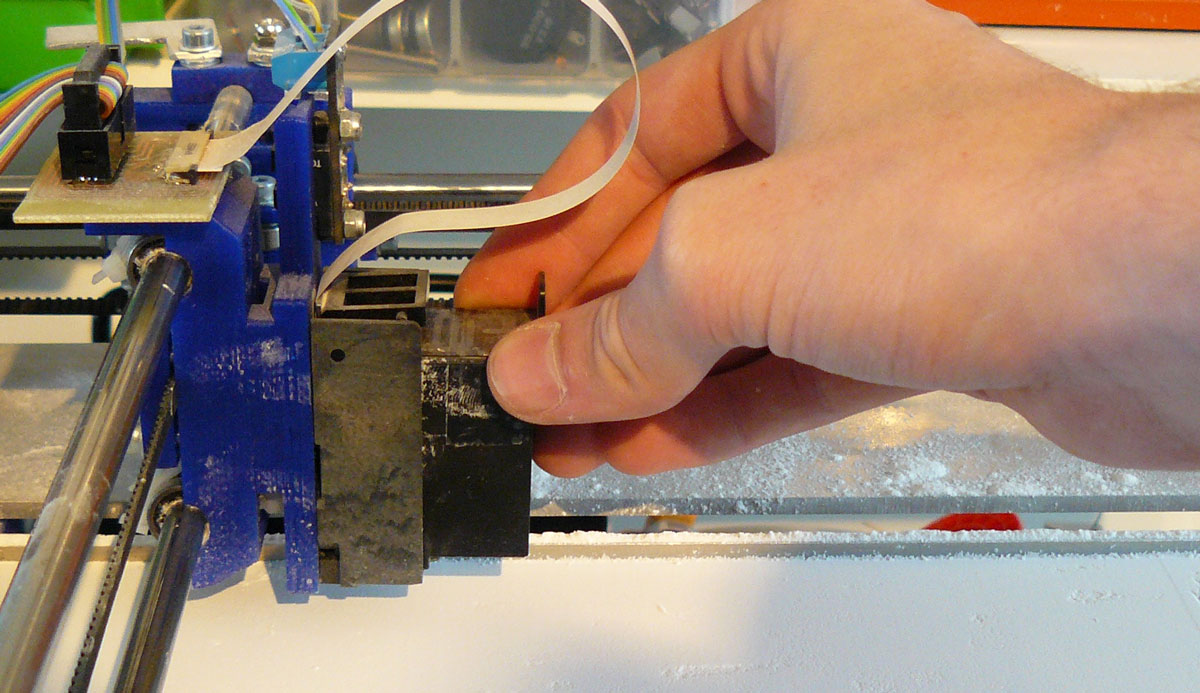
Currently the Plan B 3D prints with a layer thickness of 0.1mm to 0.25mm with a resolution of 96DPI – depending on the inkjet cartridge you customize – and a step accuracy of 0.05mm. Printing speed is about 30mm per hour with a speed of 60mm/s, however planned future firmware upgrades should increase those speeds. The print bed is a respectable 5.9in x 5.9in x 3.9in (150mmx 150mm x100mm)
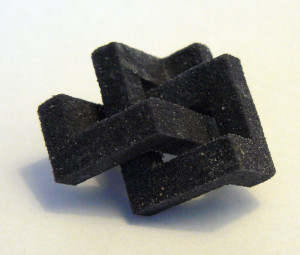 While this is probably an advanced 3D printer build, de Haas has created an incredibly detailed step by step tutorial on the Plan B’s construction, including full parts lists and suggestions for places to source them. You can find out more about the Plan B Three Dimensional Printer on Yvo de Haas’ website here.