
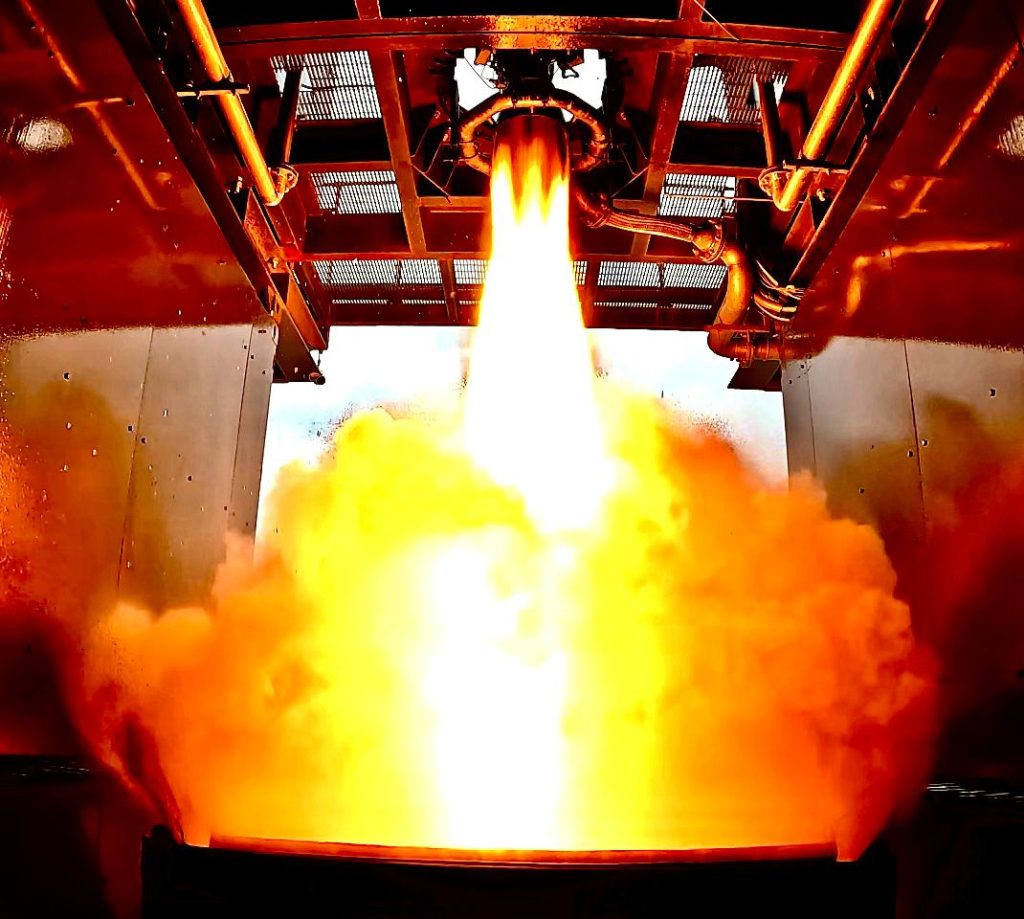
UK launch company Skyrora has finished hot-fire testing a 3.5kN low Earth orbit engine built with a titanium-coated component developed through the European Union-funded MADE-3D program. The test campaign, carried out at Skyrora’s facility in Midlothian, Scotland, closes out the company’s work within the Horizon Europe-backed MADE-3D consortium, which brought together research organizations and industrial partners to develop multi-material additive manufacturing (AM) methods for space applications.
Titanium Component Cuts Engine Mass by 44%
The modified engine incorporated a titanium-coated component designed to improve performance in the demanding thermal environment a rocket engine experiences during firing. Skyrora deposited the titanium layers using its in-house Skyprint 2 hybrid directed energy deposition (DED) 3D printer.
Replacing a nickel-based alloy with a titanium alloy in rocket engine components enables a weight reduction of approximately 44%, according to the company, opening up potential for lighter rocket engine designs going forward.
Component Held Up Through Six Live Firings
X-ray inspections conducted before and after six live firing tests found no damage to the modified component, indicating it performed as expected under the temperatures and loads generated during engine operation. The test also served to validate the manufacturing approach itself, which Skyrora says is suited to future propulsion systems.
Jordan McCormick, Design and Test Engineer at Skyrora, said moving promising technologies beyond the laboratory and proving they can perform in real operating environments is “one of the biggest challenges in advanced manufacturing.”
Multi-Material Manufacturing Targets Future Launch Vehicles
The approach explored through MADE-3D differs from conventional manufacturing in that it allows a single component to combine multiple materials within one manufacturing process, letting engineers tailor different sections of a part for strength, weight, or thermal performance. For launch vehicles, the consortium says this could reduce manufacturing complexity while improving engine efficiency.
Skyrora contributed its expertise in rocket propulsion, AM, and engine testing throughout the program. Completing the hot-fire campaign wraps up the company’s technical role in MADE-3D while feeding into its ongoing propulsion development work.
Skyrora is developing the Skyrora XL, a three-stage orbital launch vehicle for small satellites, alongside the Skylark L suborbital vehicle and its own AM capabilities. In 2025, Skyrora became the first UK-based launch vehicle manufacturer to receive a launch operator licence from the UK Civil Aviation Authority, permitting a suborbital launch of Skylark L from SaxaVord Spaceport in Scotland.
Lightweighting Rocket Engines Through Metal AM Elsewhere
Skyrora’s approach centers on substituting a nickel-based alloy for titanium deposited via its in-house Skyprint 2 hybrid DED 3D printer, cutting engine component weight by around 44% while proving durability through live hot-fire testing, part of a wider MADE-3D push to move multi-material AM out of the lab and into propulsion hardware built for flight.
NASA‘s Long-Life Additive Manufacturing Assembly (LLAMA) project put a DED-printed copper alloy combustion chamber and an iron-nickel superalloy nozzle through 23 hot-fire tests at Marshall Space Flight Center, confirming the components could withstand the extreme heat of flight conditions. Like Skyrora’s campaign, the project used hybrid DED to produce metal engine hardware and validated it through repeated live firings, though LLAMA’s aim was cutting hardware manufacturing time and cost for future Moon and Mars missions.
US aerospace company Launcher expanded its use of metal AM for its E-2 rocket engine after a thrust chamber assembly hot-fire test milestone at NASA’s Stennis Space Center, adding a second Velo3D Sapphire printer capable of processing titanium to produce orbiter pressure vessels for the engine. As with Skyrora, titanium AM here is tied directly to a hot-fire test milestone, though Launcher’s titanium adoption targets pressure vessels.
Across these programs, metal AM keeps moving from isolated demonstrations toward engine hardware that has been fired and requalified, with weight and cost each offering a distinct path toward more capable propulsion hardware.
3D Printing Industry is inviting speakers for its 2026 Additive Manufacturing Applications (AMA) series, covering Energy, Healthcare, Automotive and Mobility, Aerospace, Space and Defense, and Software. Each online event focuses on real production deployments, qualification, and supply chain integration. Practitioners interested in contributing can complete the call for speakers form here.
To stay up to date with the latest 3D printing news, don’t forget to subscribe to the 3D Printing Industry newsletter or follow us on LinkedIn.
Explore the full Future of 3D Printing and Executive Survey series from 3D Printing Industry, featuring perspectives from CEOs, engineers, and industry leaders on the industrialization of additive manufacturing, 3D printing industry trends 2026, qualification, supply chains, and additive manufacturing industry analysis.
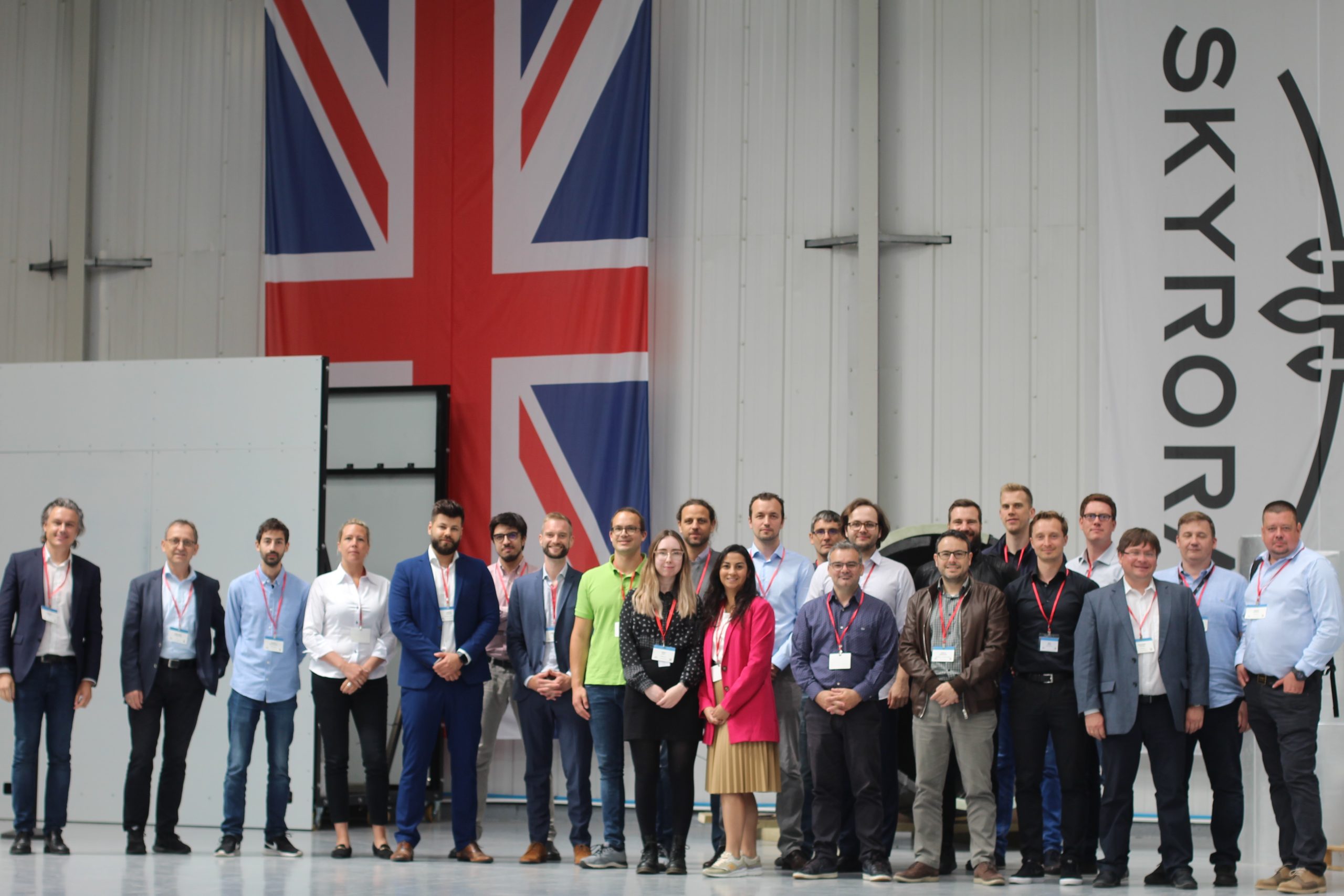
Featured image shows UK launch company Skyrora. Photo via Skyrora.