


Chinese 3D printer manufacturer PioCreat has teamed up with the U.S.-based 3D printing startup Helio Additive to integrate Dragon, a physics-based 3D print simulation and optimization software, into its printer ecosystem. As part of this collaboration, every Piocreat G5 Ultra and G12 printer will come with a Dragon license, enhancing the performance and capabilities of their 3D printing solutions.
With Dragon’s integration, Piocreat customers will benefit from hands-off printing, reducing failures and minimizing manual adjustments through physics-driven automation. The software enhances layer bonding, reduces warping and defects, and ensures more reliable parts across a broader material range, all while speeding up print times without compromising quality.
“We designed Dragon to maximize the potential of every 3D printer, and this partnership with Piocreat makes it effortless for customers to experience its benefits,” said David Hartmann, CEO of Helio Additive. “Together, we are making high-performance 3D printing more accessible and scalable.”
Starting May 1, Dragon will be available as a trial version with all new Piocreat 3D printers. Customers can activate a full subscription through Piocreat’s reseller network or directly via Helio Additive.
Dragon: Automation, Precision, and Cost-Efficiency
In 2024, Helio Additive launched its Dragon software platform, designed for process simulation and optimization to improve productivity and reduce costs in large-format additive manufacturing (LFAM). This software addresses a widespread challenge in the industry: users often set process parameters without sufficient data, leading to unpredictable outcomes and increased costs from waste, under-utilized materials, and extended engineering time.
In an interview with 3D Printing Industry, David Hartmann emphasized Dragon’s significant impact on large-scale, granular-based additive manufacturing. He explained that the software allows users to “digitally experiment with parameter sets,” drastically reducing waste and improving efficiency. One notable case study highlighted the savings of over 300 kilos of material and four weeks of engineering labor, resulting in a 70% reduction in scrap for a single part.

A Wave of Software Innovations
The additive manufacturing (AM) industry has seen a surge in software advancements. In 2024, Ai Build introduced AiBuild 2.0, a cloud-based platform certified with ISO 27001 for data security. Making its debut at RAPID + TCT 2024 in Los Angeles from June 25-27, this update integrates enhanced automation features and marks a collaboration with WASP to integrate its CAREBRO robotic-arm 3D printing tool. Aibuild 2.0 seeks to optimize industrial additive manufacturing processes, enhance accessibility through AI assistance, and support a range of technologies, including polymer extrusion and metal Direct Energy Deposition (DED).
Elsewhere, 3D printing materials producer HYBRID Software’s subsidiary AMIS launched the beta version of AMIS Pro software, aimed at binder jetting additive manufacturing.AMIS Pro is positioned as a “CAD in, print out” build preparation tool that supports both Mac and Windows, offering post-CAD and pre-print functionalities. During its beta phase, AMIS Pro is available for free, allowing users to batch-prepare parts for 3D printing. It includes a 60-day trial period and provides an opportunity for users to share feedback.
Who won the 2024 3D Printing Industry Awards?
Subscribe to the 3D Printing Industry newsletter to keep up with the latest 3D printing news.
You can also follow us on LinkedIn, and subscribe to the 3D Printing Industry Youtube channel to access more exclusive content.
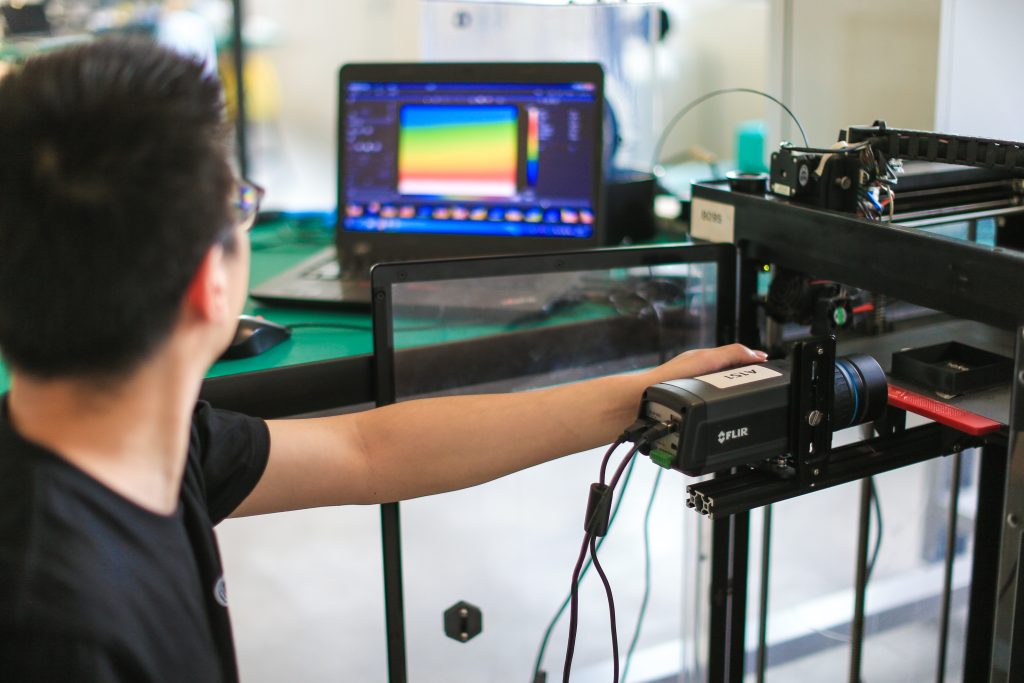
Featured image shows Laboratory experiments. Photo via Helio Additive.







