


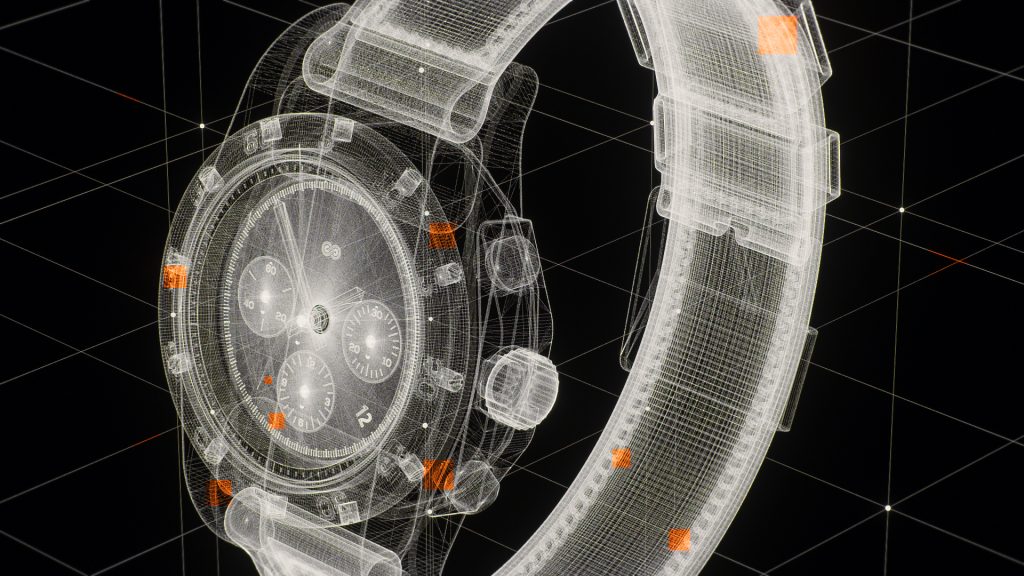
Maxon, a software company specializing in professional 3D graphics, modeling, and rendering tools, has unveiled Digital Twin, a standalone application in development that enables brands and marketing teams to create and manage photorealistic digital versions of real-world products.
Designed to preserve visual accuracy and brand consistency across platforms, the tool supports both traditional and AI-enabled design workflows. By leveraging Maxon’s 3D and rendering expertise, Digital Twin produces production-ready assets that can be placed in custom environments while retaining the product’s materials and proportions. These digital replicas can be used across advertising, video, print, packaging, and eCommerce without needing to recreate or reshoot content.
From CAD Models to Versatile Assets
The workflow begins with a cleared-for-use CAD or 3D model, which is refined into a photorealistic digital prototype. Teams gain precise control over textures, lighting, perspective, and environmental interactions, ensuring a single, authoritative version of the product that can be adapted for multiple formats.
Maxon highlights that Digital Twin “enables teams to maintain a single, authoritative digital version of a product that can be adapted for use across digital ads and video content, print, packaging, and eCommerce visuals, where visual precision and brand accuracy are essential.” The application works fully without AI, though it can integrate with AI-enabled tools at the user’s discretion, giving marketers flexibility in their workflows.

As a standalone application, Digital Twin complements Maxon’s existing suite of tools without changing them. The company relies on its own libraries to integrate the digital twin with its visual context, leaving users free to generate backgrounds or other elements using AI-enabled design tools. Maxon plans to share further details on integrations and release timing in upcoming announcements.
Other Digital Twins in the 3D Printing Ecosystem
Maxon Digital Twin sits at the intersection of digital visualization and 3D printing, joining a growing ecosystem of high-fidelity digital models that are reshaping how products are designed, marketed, and manufactured.
In 2024, Meta launched its Digital Twin Catalog (DTC) through Reality Labs Research, creating the world’s largest dataset of 3D object models. These 2,400+ digital replicas of real-world items, captured with millimeter-level accuracy, are designed for AI training, 3D reconstruction research, and immersive AR/VR applications.
Last year, Second Life, a Chinese startup, raised US$10 million to advance its AI-powered 3D scanning and printing technology. The company creates digital twins of people and pets using multi-color 3D printing and AI, turning them into photorealistic figurines or virtual avatars. With 3D photography booths capable of reconstructing models with 95% likeness in just 10 minutes, Second Life combines scanning, digital twin creation, and cloud-based 3D data management in a fully integrated workflow. The funding supports improvements in 3D printing, AI algorithms, and global expansion, highlighting the growing role of digital twin technology in additive manufacturing and personalized 3D products.
The 3D Printing Industry Awards are back. Make your nominations now.
Do you operate a 3D printing start-up? Reach readers, potential investors, and customers with the 3D Printing Industry Start-up of Year competition.
To stay up to date with the latest 3D printing news, don’t forget to subscribe to the 3D Printing Industry newsletter or follow us on Linkedin.
Featured image shows Maxon’s Digital Twin. Image via Maxon