


From a 3D printing perspective, this year was an interesting one for me, in that we now have in-yhghouse 3D printing. The U Print has been chugging away in the corner of the office producing our latest and greatest design iterations, which has seen the rest of the office slowly filling up with ABS+ parts of varying shapes and sizes. As a result of this in house capability, I have, if I am totally honest, lost some interest in the day to day shenanigans of the 3D printing industry as running a machine tends to demonstrate just how truly ridiculous this industry has become. Yet, if you look beyond the hype, 2014 has certainly seen some significant changes and genuine innovations too. So without further ado, in reverse order, these are my Top 5 stories from 2014:
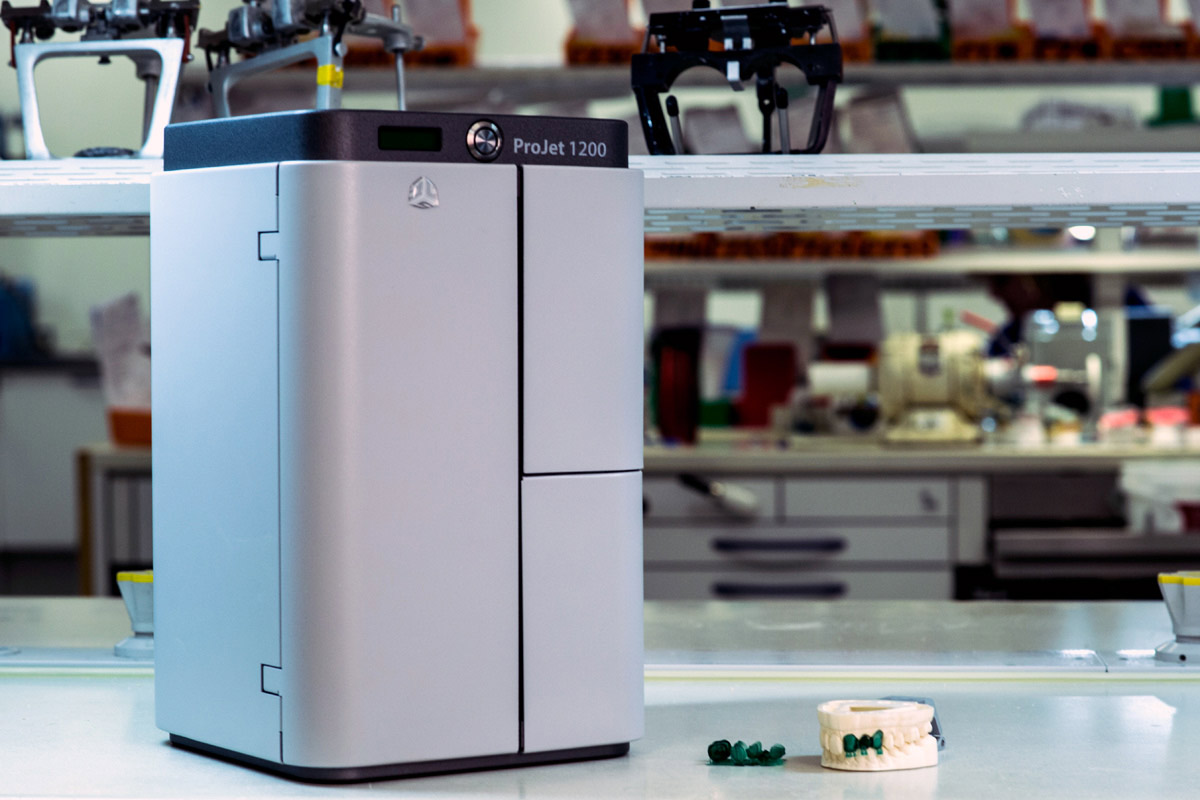
5. Whatever happened to….all those machines announced at CES in January? Yes, 3D Systems, I am talking to you. Avi was there in Vegas, the lights were shining, and all in the 3D printing world was shiny and new. We were promised new $5000 colour machines, and Ceramic machines and food machines. I had intended to buy all three so I could print all my own Christmas presents this year. My loved ones would have revelled in powdery mini me figurines, while munching on 3D printed sugar delicacies and finally sipping some mulled wine from my own specially created 3D printed cups. Alas, it was not to be, and these mystical machines are still to be commercially released. Maybe next year.
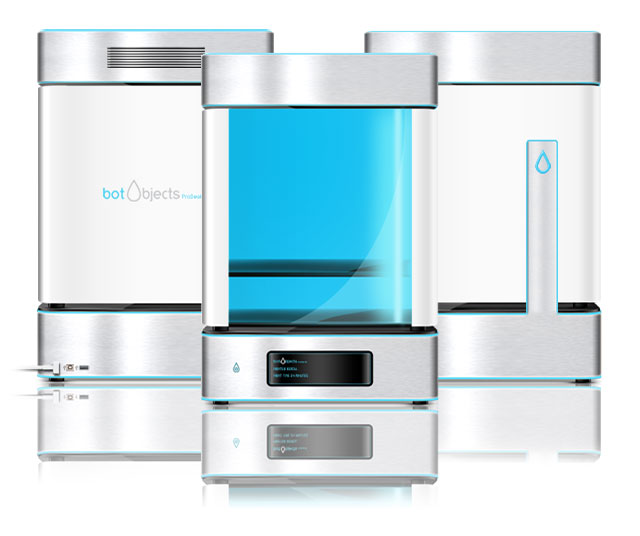
4. Whatever happened to…the Bot? After all the hype, the claims of careful marketing strategies, the online abuse (I received for daring to question the claims) and the drip fed videos, BotObjects’ marketing seems to have gone quiet. Are they still around? I do not know and I do not care. Maybe when they saw the 3D Systems colour machines at CES they retreated to their Bot Cave?
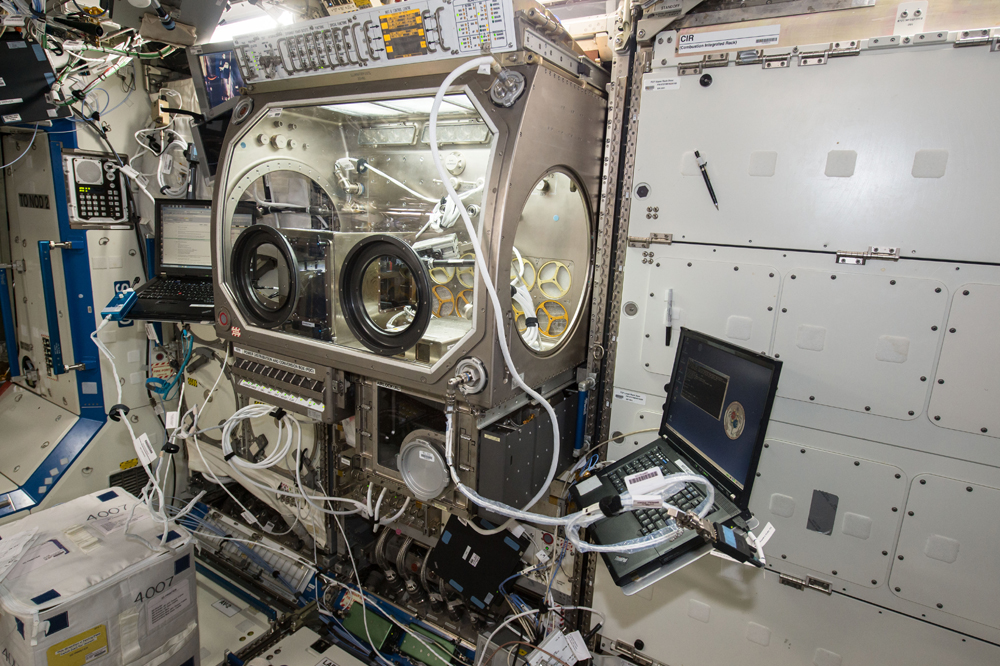
3. Interstellar Hype…Made In Space meets Neri Oxman. Towards the end of the year we had one genuine 3D printing story and one that was, well, ridiculous beyond belief. Recently we had the first ever off-world manufactured parts via the Made In Space programme operating on the International Space Station. This in itself generated copious amounts of PR and hype, following on as it did from the film Interstellar (which was very good – go and see it). We had the mainstream media sucking it all up saying “now we can make our spacecraft in space.”
I can see that this is a start and, as such, an important step but let’s be honest here —parts currently made in space are still little bits of plastic with limited uses. I am just thankful the first off world part was not a twirly vase.
Around the same time, Stratasys (never one to miss a trick) announced its annual “let’s see what Neri can do with a Connex” art show. This year it was (surprise, surprise) space related, with a future organic space suit thingy that looked more someone had run amok in the paint section of B+Q with brocolli and cauliflower. Frankly this is getting embarrassing. Stratasys make these great machines yet we are all starting to associate them with nonsense PR pseudo science. As I said, stick it in the Tate Modern, call it art, and that is fine. Just don’t dress it up as science.
Joint 1st. I couldn’t decide which to make 1 or 2 so I will cheat and award a joint number 1 to HP and Picsima.
HP, as anyone following this sector will know, made a big announcement this year, that sparked off lots of “we are not worried” PR from everyone else. Oh yes? Then Autodesk at the recent Autodesk University announced HP is using its open source Spark platform with this new HP system. 2016 is going to be a very interesting year! I have made my views on this clear enough – I think this is a big issue for the industry. Possibly the biggest, if the machine does everything it claims to (which it seems to). You can say what you like, but HP make good pro level hardware, and make no mistake this will be pro level hardware. None of this consumer 3D printing rubbish for HP. I mean, I have an A1 HP plotter in my office, currently 5 years old, still going strong, which is more than can be said about some of the hardware I use! Ask yourself this. If I were a bureau, in the market for buying a £100k machine, knowing the HP machine was coming, would I buy or lease anything else right now (unless it was replacing an existing system at end of lease)? That is the issue Stratasys and 3D Systems is facing for the next 12 months. I know what my answer would be. I predict 2015 will see a drip feed of HP PR based around “look what’s coming folks!”

One final thought on HP that I haven’t seen anyone mention yet is the link between faster printing and materials. If they can print (part for part) 10x faster, that directly translates to 10x more revenue for HP on material sales. Think about that for a minute.
My other Joint number 1 is at the other end of the scale but in its own way I believe it is just as disruptive for certain markets. Earlier this year I visited Fripp Design in Sheffield to see its mysterious Picsima 3D printer prototype. I have signed an NDA so my lips are sealed, but let me just say this is a fantastic machine that prints real silicone parts. Not some costly blend of resins in a £250k Connex that has all the structural integrity of a jelly baby, but the real genuine silicone. Suffice to say, the implications of this in certain sectors is huge. Medical parts in real materials, custom seals, sports…you name it. Fripp is looking for investment to take this to the next level. If you have a spare £200k call them…then remember I told you when HP, Stratasys or 3D Systems buys them out for (hundreds of) millions. I’ll happily take a finder’s fee of 1%.
So that’s all folks. 2014, another year of 3D printing nonsense mixed with some genuine stuff. Who knows what 2015 will bring. Rachel hinted at stuff that will impress me come the spring, but right at this time I’m happy with my U Print and its 0.254mm layers and £150 ABS+ materials, because the reality is — that works for me. Therein lies the problem for the industry, and why HP has it right. Focus on the bureau market and sod the consumers.
You heard it here first.
To all, have a restful Christmas and a Happy New Year! Then get ready for the onslaught of 3D printing hype from Las Vegas in January!




“One final thought on HP that I haven’t seen anyone mention yet is the link between faster printing and materials. If they can print (part for part) 10x faster, that directly translates to 10x more revenue for HP on material sales. Think about that for a minute.”
No one has made that link because its not a logical conclusion. If my car could fly and get to places 10x faster, that doesnt mean im going to use 10x more petrol over a year. It just means ill save that much time, it has no direct relation to costs unless you physically travel more. But then we are no longer talking about the speed… The point being, if I can 3D print 10x faster, that doesnt mean I am going to have 10x as many things that need printing.
The point Kevin is making is that if you are a bureau with a machine that can print 10x faster then you’ll sell 10x faster and use 10x more material, if you have the work. Great article Kevin and have a great Xmas
I run a printing bureau and if I had a machine that could print 10x faster, I am not suddenly going to generate 10x as many customers. The only way I am going to use 10x more materials is if I get 10x more people wanting 3D printing which has exactly nothing to do with the speed of the printer.
I also run a bureau and would welcome 10x customers as that would relate to customers receiving their parts faster and me making 10x more money (but if every bureau had one of these then it would become very competitive as we would all be stuck in the HP ink trap)
You are missing my point entirely.
I own 4 printers personally for my bureau and have lets say, 20 regular customers and hundreds of 1-off customers. If I bought 36 more printers, I have 10x the printing speed available, am I suddenly going to gain 180 regular customers and 2,000 one-off customers? Of course not. Good god answering my phone would be a full-time job in itself. Thats exactly what you are implying by getting 10x more customers by printing faster.
Daniel you are missing the point. HP is targetting this machine at bureau and larger scale users. 10x the speed equates to faster turnaround, and the potential for more throughput. In an in house environment for product development that equates to faster design iteration and less capital expenditure on other machines.
Any bureau I know would bite your hand off for 10x the speed, especially if it is used as a front end for vac casting.
How many jobs do you lose through not being able to deliver fast enough through being too costly or not having the capacity? Again, from my experience as a buyer, 90% of the jobs we place are based on turnaround and price.
Do the sums. 1 printer, 1 support contract, 1 material supply vs (potentially) 10?
Thats not what3dprintingsystems was talking about. They specifically mentioned “if you are a bureau with a machine” vs your example of an in-house design studio using one for their own purposes. I own a bureau and for sure I would LOVE a machine that prints 10x faster. However if I got HP’s machine delivered to me tomorrow afternoon, I am not going to magically generate 10x the customers. *That* is the entire point I am making. I dont care if the machine is 600x faster, Im not going to use 600x materials because my customer base has almost nothing to do with my printer speed.
How many jobs do I lose through not being able to reach speed? Somewhere around 0.5%. I can think of 2 instances out of 350+ jobs where I havent been able to meet a deadline due to printer speed. I routinely 3D print for customers with under 24 hour turnaround, some get to me in the evening and I have the part in hand delivered to them first thing next morning.
Daniel I get your point and I agree. For some it will just mean faster turnaround. We run a U Print, 10x faster speed would be good but it would not equate to 10x more material use…for us. Maybe 2 to 3x more use. Many times we choose not to run another print because we dont have the 10hrs it takes to print and wash. But for many others it can potentially mean replacement of multiple similar machines with one machine, and running one machine at capacity. For most bureau I deal with in the UK that is a very attractive option. Less overhead, less capital investment, but more material revenue for HP. That is my point.
While I agree with the overall “too much unfounded hype” message of this article, I take exception to one of the stories listed. The story of the wrench being printed in space is incredibly significant to non-enthusiasts in order for them to understand the reason the rest of us are so excited about 3D printing. This is the first story I related to my wife and mother-in-law which made the promise of 3D printing “click” for them. They were both in awe of the concept of emailing an object to the space station versus making it, shipping it, loading it on a space ship, and launching it at a huge cost. I own 3 x 3D printers. I’m always making things with them, so my wife is no stranger to the idea of printing out an object. What boggled her mind was being able to email an object to anyone with a 3D printer, even in space. That had never occurred to either of them and it opened their eyes to why normal people might want a 3D printer at home.
Fair point Bill but 12 or 13 years ago Stratasys Dimensions were marketed as “3D fax machines”. My point is the media nonsense coverage and the reality of manufacturing objects for space use (something I know a little bit about professionally). This is all experimental stuff right now, in much the same way that the ISS is used for zero gravity science tests. little bits of plastic are still little bits of plastic and as such have very limited practical applications in this environment. So they can print a spanner? Lets see a mounting bracket for a solar panel and see how long that lasts outside the capsule?
“Fair point Bill but 12 or 13 years ago Stratasys Dimensions were marketed as “3D fax machines”. ”
Ask yourself, “Marketed to whom?” Not everyone is an engineer or product designer. Ask your grandmother if those adverts helped her understand the potential uses of 3D printing in her daily life 12 years ago. This technology has existed for 30+ years and yet the vast majority of people on this planet never heard about it until quite recently. Step back and view the space station story through the eyes of a janitor, housewife, or gardener.
I guess my point wasn’t clear enough. I was saying the space station story was important because it demonstrated to the misinformed masses the concept of sending useful objects to remote locations electronically. When 3D printers are as common as microwave ovens in households, you will be able to send your uncle Reg a replacement t-joint for his garden irrigation system, for example. There are billions of people who are mostly being told by the media that 3D printers are scary devices which allow criminals to print untraceable guns. Among the general public, there is still a distinct misunderstanding of what makes 3D printers so exciting for those of us using them every day. The various space programs have historically been instrumental in introducing technologies to the general public in a positive way. I think the spanner (wrench) story is a perfect example of this.
I use fused filament 3D printers every day, so I completely agree you can’t produce parts which will endure significant structural or torsional loads.Fortunately, there are a vast number of parts on the space station which are decidedly not structural in nature. In fact, a vast number of parts are already made of plastic. I’m certain the astronauts on the Apollo mission who encountered a CO2 scrubber failure would have loved to have a 3D printer on board.
In my opinion, the space station story was a top 5 story, rather than an example of overblown hype (for the reasons I stated above.) That is the only point upon which we disagree. Otherwise, I accept the validity of your opinion, as such. I have also enjoyed our subsequent discourse and the opportunity to clarify my reasoning. Happy Holidays!
With number five, you say you don’t know what happened to the 3D printers. Well they are all over the place. I have been following those printers for a while, and they haven’t dissapeared, you can still get your printed cookies and wine glasses.