
China Yangtze Power has awarded Dongfang Electric Machinery a reported 15.8 million yuan (approx. $2.36 million) contract to develop in-situ AM technology for repairing turbine runner seal rings at the Three Gorges hydropower station.
The 29-month project covers seal rings between 8.4 and 10.9 meters in diameter across eight generator types at the world’s largest hydropower facility.
The award, designated tender reference T261100130982, represents the second phase of a research program between China Yangtze Power, which operates Three Gorges, and Dongfang Electric Machinery, a core subsidiary of state-owned China Dongfang Electric Group based in Deyang, Sichuan.
Published in August 2026, the original tender specifies that the project involves developing both the repair technology and the equipment needed to perform additive manufacturing on large circular structures in situ. Verification will include mechanical testing, non-destructive inspection, dimensional checks, and residual-stress analysis by a third-party organization with valid CMA certification.
The Challenges of Seal Ring Replacement
Three Gorges Hydropower Station has a total installed capacity of 22,500 megawatts across main turbine units each rated at 700 MW. The left-bank turbines first entered service in 2003, giving the station over two decades of operation. Seal rings sit at the interface between rotating and stationary components, controlling water flow and preventing leakage. According to the tender, the current maintenance approach when a seal ring fails is full replacement.
The equipment manufacturer redesigns and produces an entirely new ring to specification, transports it to the dam, heat-fits it onto the runner using an interference fit, and then machines it for dimensional accuracy. The tender states that this process suffers from “uncontrollable timelines, significant transportation difficulties, and a large workload for installation and machining,” and notes that excessive material removal during the machining stage is irreversible.
For machines with runner sealing rings approaching 10 meters in diameter, this process presents substantial maintenance challenges, and turbine downtime can result in lost generation.
What Dongfang Electric is being asked to develop is a technology intended to reduce the need for full replacement. In-situ metal deposition means building up material directly on the worn surface using AM equipment installed on-site. The tender describes a multi-machine collaborative system for 10-meter-class rings, comprising modular load-bearing structures, multiple additive execution units, intelligent control software, online monitoring equipment, stress relief equipment, and a dust purification system.
The scope also includes numerical simulation of additive deformation mechanisms, forming process and path planning, defect suppression, microstructure performance control, and residual stress management.
The contract requires the winning bidder to compile standardized repair procedures for the upper and lower sealing rings across all eight generator types at Three Gorges, producing normative documents intended to guide future on-site applications.
Patents, Testing, and the Road Ahead
It is worth stating plainly what this contract is and is not. It is a technology development and equipment prototyping program. An earlier first phase, described in the tender as a feasibility study, concluded that in-situ additive manufacturing of seal rings “is technically feasible.” Phase II is intended to move from that finding toward key technology development and complete equipment sets.
But the tender does not indicate that full-scale additive repairs have already been completed at Three Gorges. The reported RMB 15.8 million price tag is modest by infrastructure standards. If the resulting technology can repair components at a fraction of conventional replacement cost and reduce turbine downtime, the return on a $2.36 million R&D investment could be substantial across the fleet. But that outcome remains to be demonstrated.
The contract also requires at least 10 patent applications, including a minimum of six invention patents, and at least one paper accepted by a Chinese core, SCI, or EI-indexed journal. That intellectual property requirement suggests this is intended to produce a documented, reproducible technology base, not a one-off repair solution.
Whether Dongfang Electric can deliver a validated system across components spanning 8.4 to 10.9 meters and eight machine types, within 29 months and a reported $2.36 million budget remains to be seen.
To stay up to date with the latest 3D printing news, don’t forget to subscribe to the 3D Printing Industry newsletter or follow us on LinkedIn.
Explore the full Future of 3D Printing and Executive Survey series from 3D Printing Industry, featuring perspectives from CEOs, engineers, and industry leaders on the industrialization of additive manufacturing, 3D printing industry trends 2026, qualification, supply chains, and additive manufacturing industry analysis.
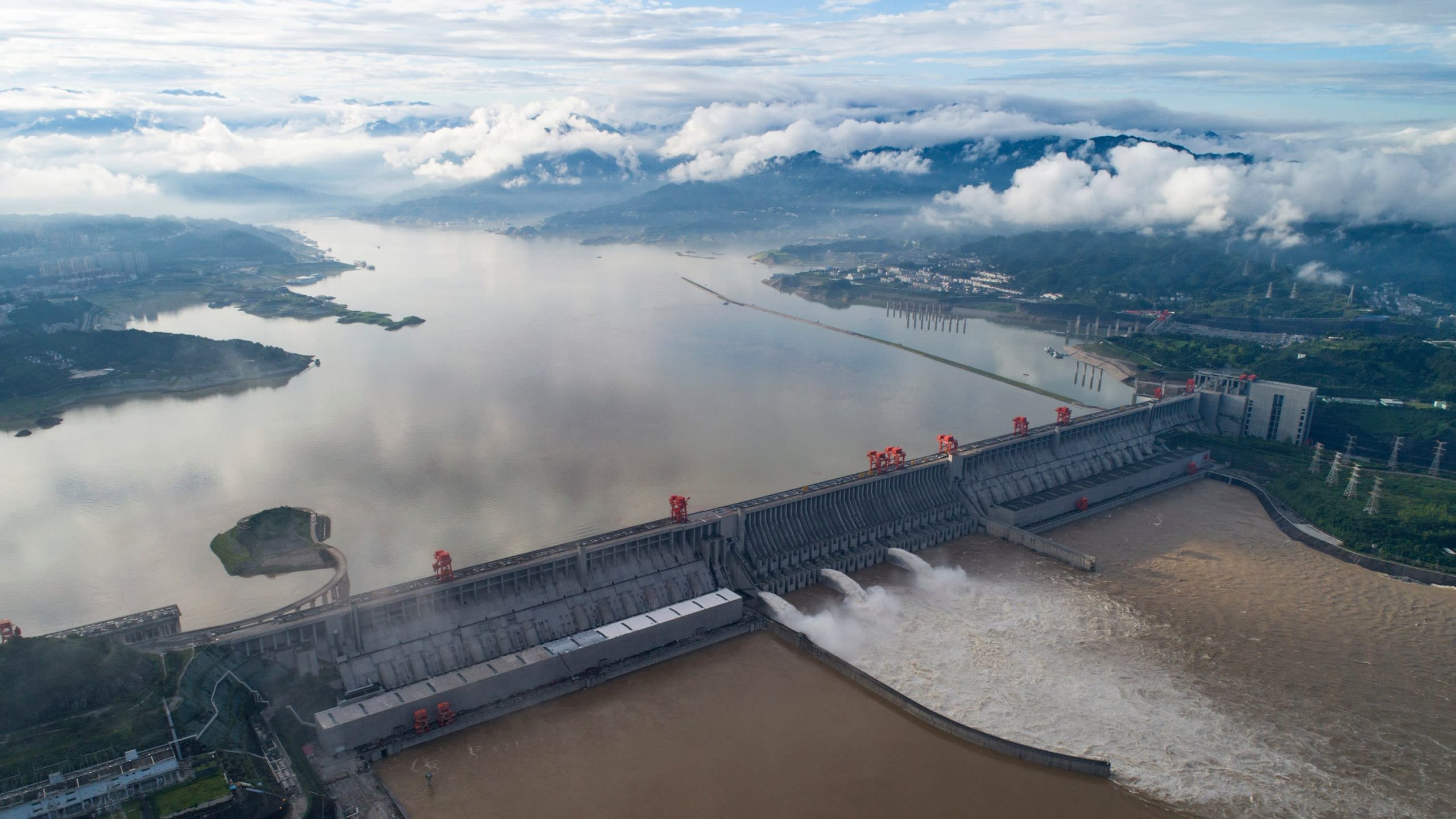
Featured image shows China’s Three Gorges Dam discharging floodwaters in July 2020. Photo via AP.