

Where is AI unlocking advantages? Explore what is possible at AMA: Software 2026.
A subsidiary of Chinese steel giant Jingye Group has signed an agreement to build a RMB 5 billion (about US$700 million) manufacturing base in Fengshun County, Guangdong Province, equipped with 400 metal 3D printers, 20 metal powder production lines and 100 metal injection molding (MIM) lines. The deal was signed on September 23 between the Fengshun County People’s Government and Jingye Future Smart Manufacturing (Shenzhen) Technology Co., Ltd., which will develop and operate the site.
The facility will focus on precision components for 3C consumer electronics, starting with foldable-screen hinges and camera modules for smartphone suppliers. At full capacity, it is expected to generate annual output of RMB 10 billion and create more than 1,000 jobs. Construction is underway, with partial production targeted before the end of 2026.
From powder to finished part
The base will cover the full metal processing chain under one roof. Its powder lines will supply feedstock for both additive manufacturing and MIM, as Jingye aims to establish a high-performance metal powder R&D and production hub for South China. Pairing the two processes lets the operation use MIM for high-volume small components and laser-based printing for more complex geometries.
Beyond smartphones, Jingye plans to expand into precision structural parts for robotics, liquid-cooling components and medical devices, all within a digitalized “super factory.”
Two-phase investment
Phase one accounts for RMB 2 billion, with phase two adding roughly RMB 3 billion. Local officials called it the largest single industrial investment Fengshun has attracted in recent years, and County Mayor Ling Wangyuan urged the company to sign, start construction, begin production and scale up within the same year.
The agreement was signed by Deputy County Mayor Zeng Xiaoli and Han Xiaofeng, head of Jingye Future Smart Manufacturing. Han said the group would treat Fengshun as an important base for its South China operations.
China’s battle for 3D printed smartphone parts
Jingye is entering a crowded field. With in-house powder, 400 metal printers and MIM lines, the steelmaker aims to compete for smartphone hinge and camera module contracts that Chinese brands and suppliers are already fighting over.
Foldables have become the main battleground. OPPO’s Find N5 used a titanium hinge printed by Bright Laser Technologies (BLT), cutting thickness from 0.3mm to 0.15mm and raising rigidity by 36%. Apple has followed, with suppliers reportedly producing 3D printed hinge modules for its first foldable iPhone.

Competition is also playing out at machine level. According to CONTEXT’s latest market analysis, China’s metal PBF growth is driven by consumer electronics volumes favoring lower-priced systems, and the country’s industrial printer market is supplied overwhelmingly by domestic vendors.
Jingye brings scale and steel know-how. Whether that is enough to win against established players like BLT remains to be seen.
Register now for AMA: Software 2026. Join 3D Printing Industry on 22 October for expert presentations, panel discussions and live audience Q&A exploring the software shaping additive manufacturing. Register here.
To stay up to date with the latest 3D printing news, don’t forget to subscribe to the 3D Printing Industry newsletter or follow us on LinkedIn.
Explore the full Future of 3D Printing and Executive Survey series from 3D Printing Industry, featuring perspectives from CEOs, engineers, and industry leaders on the industrialization of additive manufacturing, 3D printing industry trends 2026, qualification, supply chains, and additive manufacturing industry analysis.
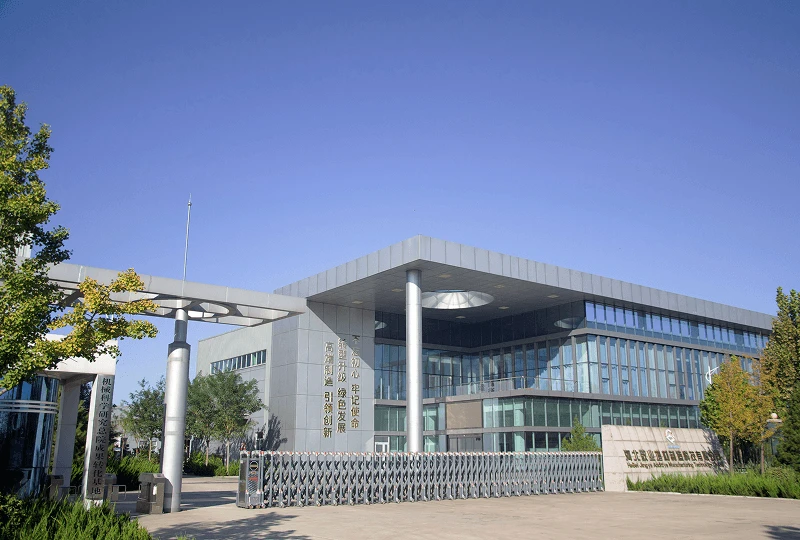
Featured image shows Headquarters of Hebei Jingye Additive Manufacturing Technology. Photo via Jingye.







