

Green energy production is finally taking off and 3D printing is giving it a push. Just last week we reported on OPV, 3D printed photovoltaic cells that cost less and take less time to install, while Inhabitat reported on a German Village that produces 321% more green energy than it needs. In case you had any doubt, going green is possible. And, now, Omni3D, a Polish 3D printer manufacturer, wants to help you help them take the next step, by making wind energy more accessible, mobile and open source.
What they want to develop, with help from a newly launched Kickstarter campaign, is called AirEnergy3D, a mostly 3D printable kit of parts to build a portable wind turbine, based on the interesting concept – an evolution of the RepRap ideal – that a desktop FDM 3D printer could today be used to make something even more valuable than the 3D printer itself.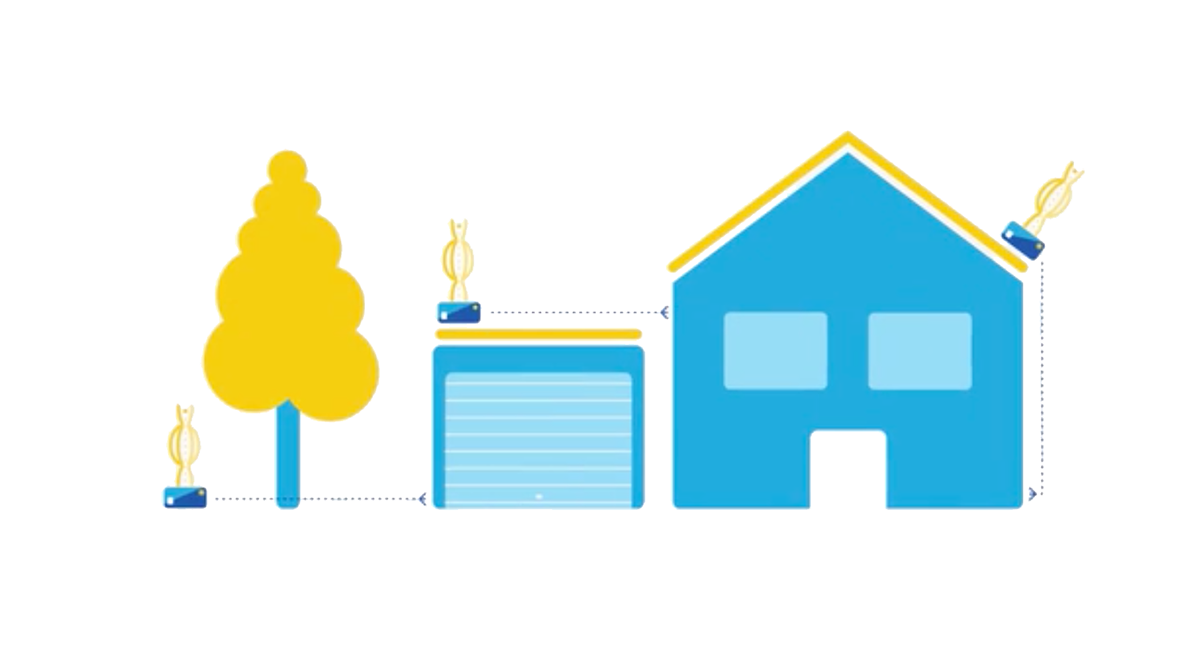
This something is a wind turbine capable of producing up to 300 Watts of electricity. It can be folded and fit inside a backpack or be moved around the house for optimal positioning. At the current development stage, Omni3D has a working proof of concept prototype that can power a lightbulb. They suggest that their 300W goal would be enough to charge a laptop and a couple of smartphones, or several lightbulbs. They believe that they can build it by raising £19.000 (about $30.000) through Kickstarter and intend to make the entire project available to the open source community.
That means that Makers could simply download the project and build it themselves by sourcing the parts that cannot be 3D printed and by 3D printing the rest. Those who just want access to a portable power source can back the project on Kickstarter and take a kit home for the £290 (about $450) Early Bird offer. Omni3D’s goal is a $350 final retail price.

Although solar energy is currently the most widely adopted form of renewable energy (even for portable systems) it does present many limitations that could be overcome by wind energy. All AirEenergy3D needs to produce electricity is a mild breeze. It is more portable than any photovoltaic system and, thanks to 3D printing, it costs a lot less to manufacture and produce. Most of all, it can work in full darkness. There might not be a better time switch it on.