

Aurora Labs (ASX: A3D) has raised A$6 million through a two-tranche placement to scale production of its additively manufactured turbojet engines. Chairman David Trimboli committed A$550,000, and Walkinshaw Group Holdings took a strategic stake. The raise, announced on 28 October 2026, lifted a trading halt. It comes as the company moves from development into commercial production of propulsion systems for defence and aerospace customers.
Aurora will issue about 109.1 million new shares at A$0.055 each. Most of the money will expand production lines at its facility in Canning Vale, Western Australia, and buy more metal additive manufacturing equipment.
Placement terms and a strategic shareholder
The deal is split into two tranches. Tranche 1 raises A$4,565,000 through 83,000,005 shares. Of those, 30.64 million use Aurora’s capacity under ASX Listing Rule 7.1 and 52.36 million use Listing Rule 7.1A. Settlement is due on 2 November 2026 and allotment on 4 November. Tranche 2 raises the remaining A$1,435,000 through 26,090,914 shares. It needs shareholder approval at a general meeting planned for mid-January 2027, as does Trimboli’s participation.
The issue price is a 3.67% discount to the 10-day volume-weighted average price (VWAP) and a 3.16% discount to the 5-day VWAP. It is 6.77% below the A$0.059 last traded on 23 October. The new shares equal about 20.8% of Aurora’s current shares on issue.
Aurora ran the placement itself, with no lead manager or adviser. Participating brokers will receive A$213,000 in cash fees and 7.5 million options. Each option is exercisable at A$0.12, expires three years after issue, and cannot be transferred.
The Walkinshaw stake may matter more than its dollar value. Walkinshaw Group is an Australian-headquartered engineering group that designs, develops and contract-manufactures for global customers. Aurora says the investment opens talks on Walkinshaw supporting its production scale-up. The arrangement could also run the other way, with Aurora lending its metal additive manufacturing expertise to Walkinshaw’s own production.

Where the money goes
Most of the proceeds are for manufacturing capacity. Aurora plans to expand existing production lines for higher-volume turbojet output and buy commercial off-the-shelf metal additive manufacturing systems to raise throughput and efficiency
Aurora also plans to spend on product readiness. That covers finishing production data packs and investing in systems, processes and key staff to support full-rate production. The rest goes to business development and marketing, patent and intellectual property maintenance, keeping its technical and commercial data rooms, keeping its AS9100D aerospace quality certification, and working capital.
The company describes the goal as a scalable, vertically integrated manufacturing platform that can supply propulsion systems to customers in Australia and overseas.
Trimboli framed the raise as a turning point in the company’s direction. “The successful completion of this $6m placement represents an important step in Aurora’s development as we continue to transition from technology development towards scaled commercial manufacturing and delivery of our proprietary propulsion systems,” he said.
He tied the capital spending directly to demand. “Importantly, this funding will allow us to increase production capacity and invest in additional manufacturing infrastructure, ensuring we are better positioned to service existing customers and pursue the growing pipeline of opportunities across the defence and aerospace sectors.”
A year of commercial milestones
The raise follows a run of operational milestones. Aurora gained AS9100D certification, the quality standard for aerospace manufacturing. It began commercial deliveries of its AU4 propulsion system and received A$1 million from Australia’s Defence Industry Development Grant program. It also signed a strategic Teaming Agreement with European missile maker MBDA.
Most recently, Aurora won its first US propulsion system order. The company says this gives it an initial foothold in the US aerospace and defence market and widens its international customer base. Aurora began as a developer of 3D metal printers and printed industrial parts. It now focuses on developing propulsion for unmanned aerial systems in defence, drawing on its in-house additive manufacturing capability.
Building sovereign engines at scale
Aurora is targeting a gap that has opened in defence supply chains. Demand for small, expendable turbojets for drones, loitering munitions and cruise missiles is rising faster than conventional engine makers can supply them. The company aims to fill that gap from Western Australia. It combines its own engine designs with in-house metal printing and an AS9100D-certified production line, positioning itself as a domestic supplier of what it calls sovereign propulsion.
The UK is pursuing the same idea through state co-investment. The UK Ministry of Defence and manufacturing start-up Alloyed took a new turbojet engine from initial concept to a completed flight in under seven months, as part of a program aimed at building a domestic, rapidly scalable propulsion capability. A 300N-class engine from that program has completed flight testing and entered serial production. Before that, Argive, an Alloyed-owned microturbine company in Oxford, flight-tested its A300 3D printed microturbine on MGI Engineering’s SkyShark one-way effector drone and reported capacity to produce hundreds to thousands of turbines per month in the UK with a near-shore supply chain.
In the US, established and start-up engine makers are converging on the same production model. Pratt & Whitney has tested its TJ150 engine with nearly 60% additively manufactured content, consolidating more than 50 hot-section components into a handful of printed parts. The company says simplifying the design and scaling production quickly is essential for expendable engines whose missions last minutes or hours. Beehive Industries, after high-altitude testing confirmed its 3D printed Frenzy engine’s performance across its full operating range, is now moving to scale production to meet growing demand.
Proving that additively manufactured turbojets can fly is largely done. The open question is who can produce them reliably, in volume and inside allied supply chains. With this raise, Aurora is trying to answer that for Australia.
To stay up to date with the latest 3D printing news, don’t forget to subscribe to the 3D Printing Industry newsletter or follow us on LinkedIn.
Explore the full Future of 3D Printing and Executive Survey series from 3D Printing Industry, featuring perspectives from CEOs, engineers, and industry leaders on the industrialization of additive manufacturing, 3D printing industry trends 2026, qualification, supply chains, and additive manufacturing industry analysis.
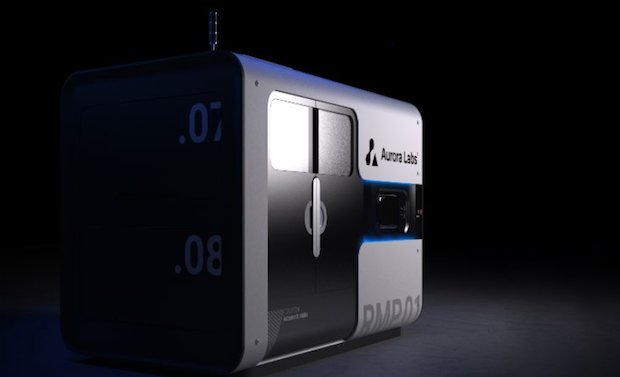
Featured image shows Defence propulsion systems. Photo via Aurora Labs.







