

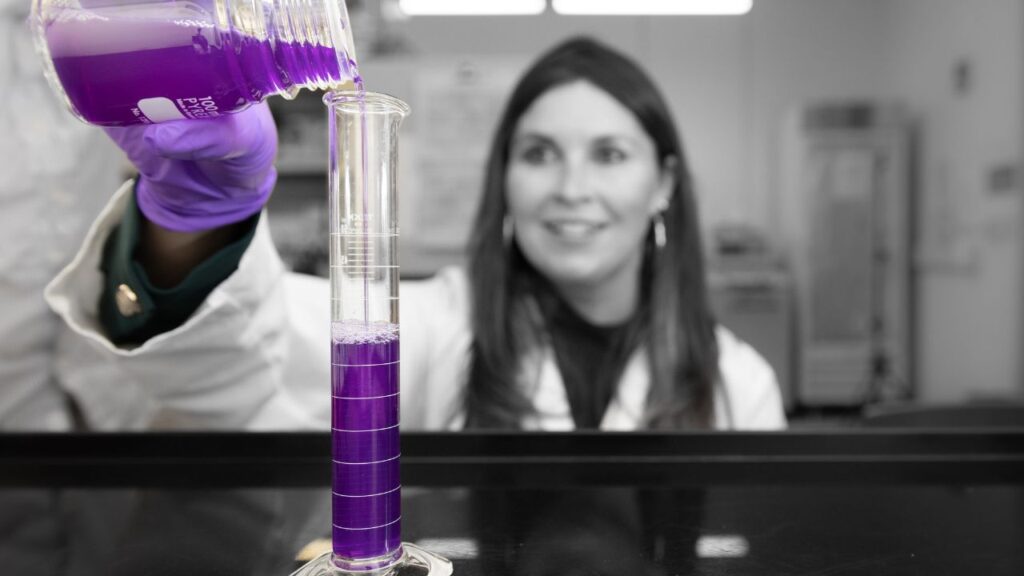
Connecticut-based biotech LambdaVision has spent nearly a decade turning the International Space Station (ISS) into its primary manufacturing floor. The company has developed an artificial retina, which is assembled from hundreds of alternating layers of bacteriorhodopsin, a light-sensitive protein.
On Earth, gravity creates sedimentation and buoyancy effects that disrupt layer uniformity, driving up material waste and capping how many viable implants can be produced. In orbit, those forces disappear, and the results are measurably different.
Over nine investigations conducted in partnership with commercial provider Space Tango, the team built and refined a compact, automated system housed inside CubeLab hardware. Each mission allowed engineers to stress-test fault detection, tighten process repeatability, and advance the quality-control documentation required for eventual regulatory clearance.
The payoff has been consistent: microgravity-produced retinas outperform Earth-made equivalents on every measured metric, layer uniformity, optical clarity, reproducibility, material efficiency, and long-term biocompatibility.
“Through our flight projects on the ISS, we’ve taken a lot of the risk out of demonstrating the value of manufacturing in space,” said LambdaVision CEO Nicole Wagner.
That progress matters because the implant targets age-related macular degeneration and retinitis pigmentosa, two degenerative conditions affecting more than 200 million people worldwide with no available cure. A tenth ISS mission, planned for later in 2026, will shift focus from process refinement to increasing production volume. The company has also reserved capacity on the future Starlab commercial station.
“We’re now thinking about how we scale in orbit and what’s next as we transition from the ISS to other platforms in the future,” Wagner added.
ISS Has Become a Production Platform, Not Just a Lab
LambdaVision’s approach reflects a wider strategic bet: that certain biologics and medical devices can only be made competitively in the absence of gravity, and that building the manufacturing infrastructure now, before the ISS retires, is the only viable path to commercialization.
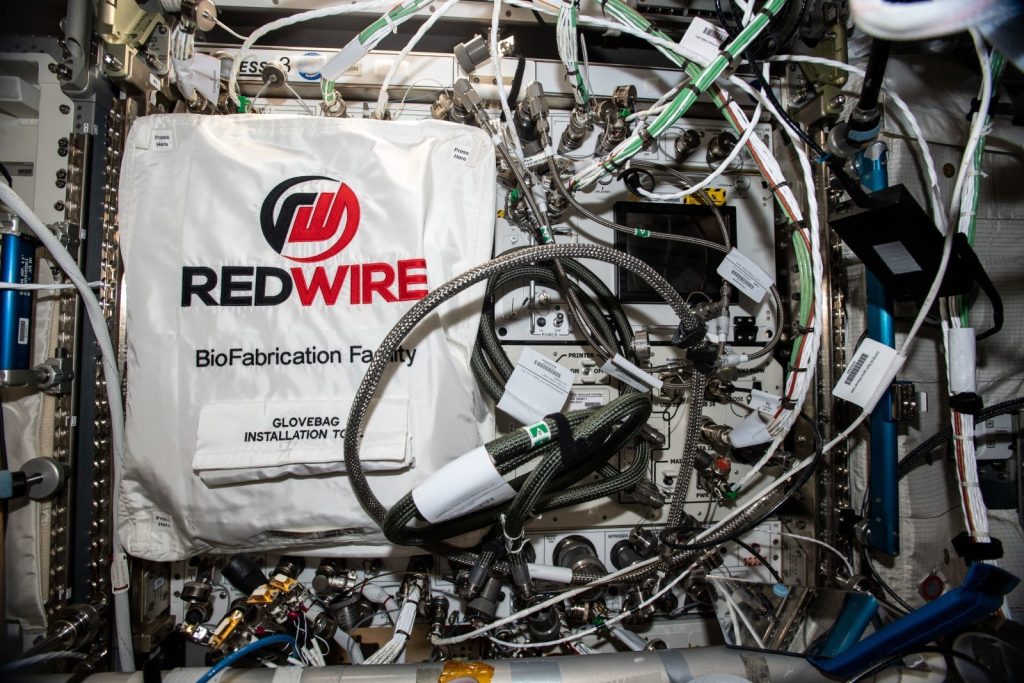
The company is not alone. Redwire’s upgraded BioFabrication Facility, installed on the ISS in early 2023, represents the first system capable of printing human tissue in microgravity, using adult pluripotent stem cells deposited in ultra-fine bioink layers that self-support after a maturation period of 12 to 45 days.
On a parallel track, five Belgian organizations are collaborating under the AstroCardia project to send a bioprinted miniature heart and circulatory system to the ISS, motivated by findings that cardiac tissue ages approximately 20 times faster in zero-gravity, a property researchers hope to study for aging and drug development applications.
These efforts share the same underlying logic as LambdaVision’s: microgravity removes structural constraints that limit what can be built on Earth, and the ISS provides a persistent, accessible environment to validate that manufacturing at scale.
3D Printing Industry is inviting speakers for its 2026 Additive Manufacturing Applications (AMA) series, covering Energy, Healthcare, Automotive and Mobility, Aerospace, Space and Defense, and Software. Each online event focuses on real production deployments, qualification, and supply chain integration. Practitioners interested in contributing can complete the call for speakers form here.
To stay up to date with the latest 3D printing news, don’t forget to subscribe to the 3D Printing Industry newsletter or follow us on LinkedIn.
Explore the full Future of 3D Printing and Executive Survey series from 3D Printing Industry, featuring perspectives from CEOs, engineers, and industry leaders on the industrialization of additive manufacturing, 3D printing industry trends 2026, qualification, supply chains, and additive manufacturing industry analysis.
Featured image shows LambdaVision CEO Nicole Wagner working with bacteriorhodopsin, the purple protein used to create the company’s artificial retinas. Photo via Juan Patino Photography.