

Discover exclusive software insights at AMA: Software 2026, on October 22. Register for free!
Jiuquan City, in China’s Gansu Province, issued an EPC general contracting tender for a commercial aerospace manufacturing plant that combines AI design with metal 3D printing. The project has a total investment of 3 billion yuan, approximately $500 million, and includes a metal powder center with 6,300 tons of annual output. That is a large single addition to the feedstock supply for China’s commercial space sector.
The tender was published on the Gansu Economic Information Network, a provincial government channel. Construction is scheduled to begin on November 1, 2026, with a 395-day construction period, which puts completion of the build phase around the end of 2027.
Powder at the center of the project
The facility has three main parts: a high-end metal powder center, a 3D printing center, and AI design and intelligent manufacturing facilities. A laser-cladding repair center with four machines is also included.
The powder center is the largest. It will be equipped with 18 powder production units, producing a combined 6,300 tons a year, or about 350 tons per unit. The tender specifies the plasma rotating electrode process (PREP) with a powder yield of 60%. In PREP, a rotating metal bar is melted at its tip by a plasma arc, and the droplets that fly off solidify into spherical particles. The method is widely used for aerospace-grade powders because of the uniform, spherical particles it produces. The 3D printing center will have 100 printing units with an annual output of 500 tons.
A new node in the aerospace supply chain
The project targets large-scale metal powder consumption in commercial aerospace, where additive manufacturing is increasingly used for engine and structural parts. Once completed, the 6,300-ton center will become a new node in China’s commercial aerospace powder supply chain.
Jiuquan’s choice of sector fits its profile. The city is closely associated with China’s space program through the Jiuquan Satellite Launch Center, which makes it a natural base for capacity serving launch vehicle makers.
Three alloy families stand out as the project advances: titanium alloys, superalloys and copper alloys. Titanium is valued for lightweight structural parts. Superalloys are standard for components exposed to extreme heat. Copper alloys are used in rocket combustion chambers because they conduct heat well.
Combining AI design, powder production and printing on one site brings several stages of the additive manufacturing chain together. AI design tools are commonly paired with 3D printing to create complex, weight-optimized geometries that conventional methods struggle to produce.
Powder-to-Part Capacity Becomes China’s Industrial Bet
The Jiuquan project puts design, powder production and printing on one site instead of relying on outside feedstock. It targets a supply gap in commercial aerospace additive manufacturing, where steady access to titanium, superalloy and copper alloy powder limits how quickly engines and structures can be built. Locating it in Jiuquan, a city tied to China’s launch infrastructure, puts that supply close to the demand it serves.
Other Chinese powder producers are also expanding ahead of demand. Jiangsu Vilory Advanced Materials closed a US$14.8 million Series C+ round for its Phase IV metal powder expansion, backed by Jiangsu Guotou and Suneng Co. That phase targets 3,000 tons of titanium, 5,000 tons of copper and 2,000 tons of aluminum powder a year, built to lights-out factory standards. Its Phase III plant is already running more than 10 EIGA atomization lines, and the company lists aerospace and commercial space among its customers.
The same integrated approach is spreading beyond aerospace. A Jingye Group subsidiary has agreed to build a RMB 5 billion super factory with 400 metal 3D printers in Fengshun County, Guangdong, alongside 20 powder production lines and 100 MIM lines.
Across China, metal powder capacity is being built in the thousands of tons ahead of confirmed demand. Jiuquan’s plan stands out because it is tied specifically to commercial space. The next test is how much of this new volume reaches flight-qualified grades.
Register now for AMA: Software 2026. Join 3D Printing Industry on 22 October for expert presentations, panel discussions and live audience Q&A exploring the software shaping additive manufacturing. Register here.
To stay up to date with the latest 3D printing news, don’t forget to subscribe to the 3D Printing Industry newsletter or follow us on LinkedIn.
Explore the full Future of 3D Printing and Executive Survey series from 3D Printing Industry, featuring perspectives from CEOs, engineers, and industry leaders on the industrialization of additive manufacturing, 3D printing industry trends 2026, qualification, supply chains, and additive manufacturing industry analysis.
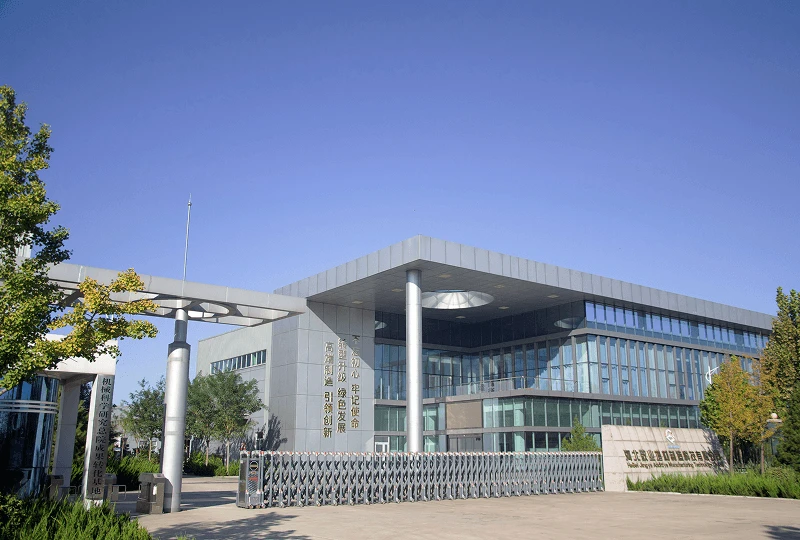
Featured image shows Hebei Jingye Additive Manufacturing Technology headquarters. Photo via Jingye.







