

If you work in architecture or interior design and need to document an existing building, odds are you’ve already tried scanning rooms with your phone or tablet. Built-in LiDAR on newer devices has made app-based scanning genuinely useful for quick-as-builts, and for a lot of jobs, it’s good enough.
But anyone who has tried to use that data for detailed renovation plans or engineering work knows where it falls short. The range is limited, the accuracy drops off quickly, and the point clouds are thin compared to what you get from a professional terrestrial scanner. The problem is that professional terrestrial scanners tend to start around $25,000 and can run well past $50,000.
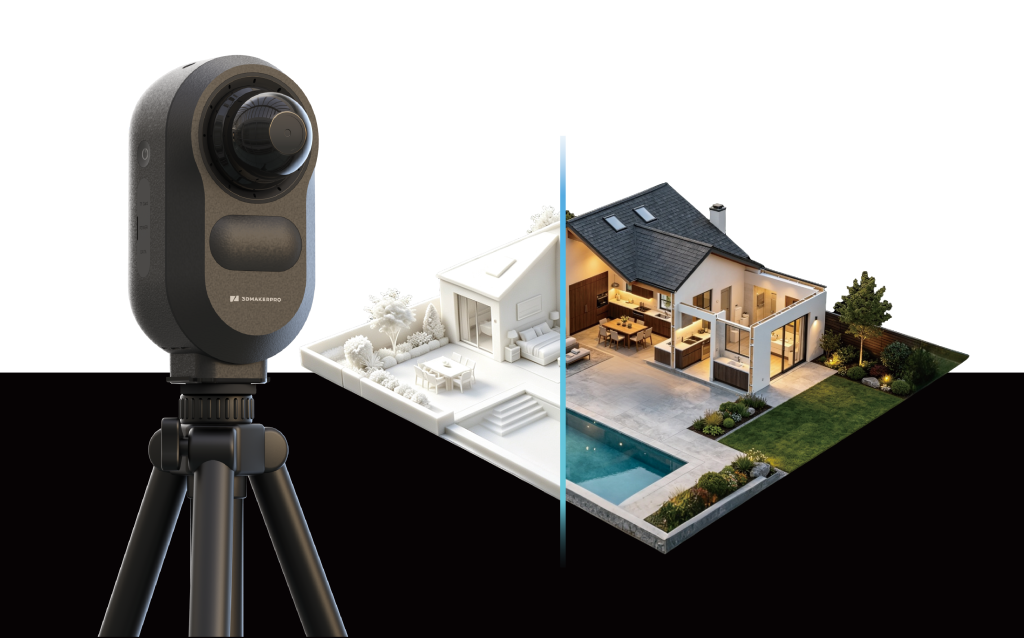
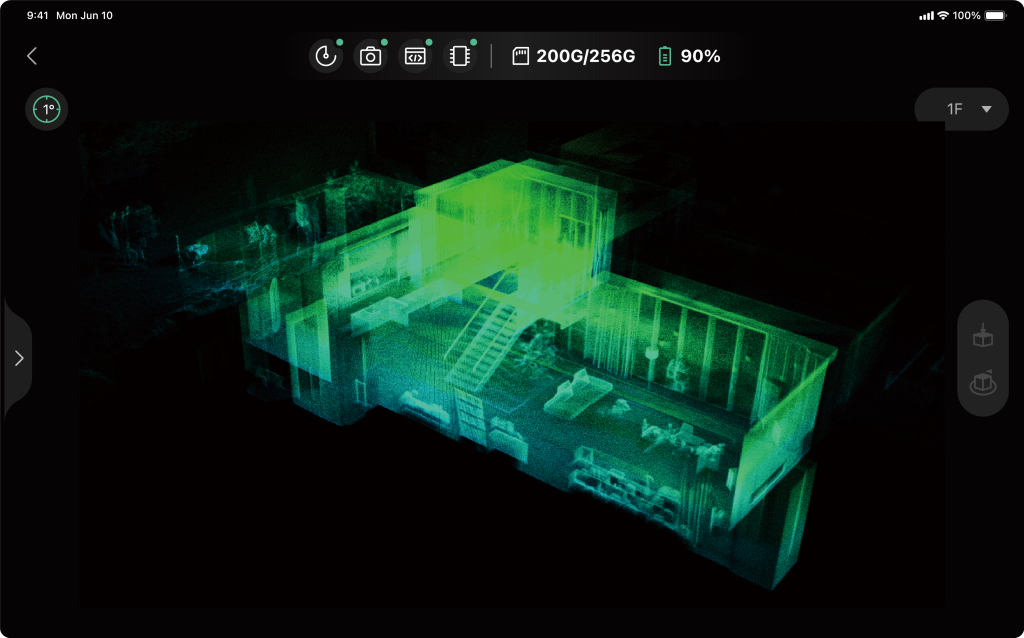
3DMakerpro’s Owl stationary LiDAR 3D scanner is designed to sit closer to the professional end of that scale in capability while staying well below it in price. It captures both point-cloud and panoramic image data in a single pass, and it’s controlled via iPad with an M1 chip or newer.
Turning building scans into usable plans
On the hardware side, 3DMakerpro specs the Owl at 192,000 points per second with a full 360° horizontal sweep and 280° vertical field of view. The company rates accuracy at 5mm at 10 meters, with a working scan radius of up to 60 meters and a maximum range of 120 meters.
Color comes from a 48-megapixel three-camera array with HDR support, which is worth noting because mixed lighting is one of the persistent headaches in interior scanning. The unit weighs 1.6 kg, uses a 905nm Class 1 laser, and runs on a 12,000 mAh battery rated for about two hours, with PD 65W USB-C charging. The Owl outputs data in PLY, E57, OBJ, and PNG formats.
What ties the hardware to an actual workflow is the software. RayStudio, which is free, handles post-processing for point clouds and panoramic images. RayCraft, a paid application, extracts building structure data for cloud editing. And JimuMeta is 3DMakerpro’s platform for online showcases, case sharing, floor plan editing, and export.
One of the company’s headline features is what it calls AI-powered floor plan extraction, described as a one-click process for generating 2D plans from scan data. For firms that spend hours drafting floor plans manually, that feature alone could save a meaningful amount of time.
What buyers get at each price point
The Owl comes in three configurations. The Standard ($2,599 retail) is the three-camera scanner by itself. The Premium ($2,799) bundles the three-camera scanner with a tripod, accessory kit, two power banks, and a carrying case. The Luxury ($3,999) swaps in a five-camera scanner with the same accessories.
During the 30-day launch window starting November 3, the first 100 units of each tier are priced lower at $1,499, $1,699, and $2,499, with general launch pricing at $1,599, $1,799, and $2,599. All three are available through 3DMakerpro’s Geo Store.
Whether the Owl’s real-world performance matches the spec sheet is something that will become clearer once units ship. At these launch prices, it sits well below the professional terrestrial scanners while aiming to offer more range and accuracy than phone-based LiDAR.
To stay up to date with the latest 3D printing news, don’t forget to subscribe to the 3D Printing Industry newsletter or follow us on LinkedIn.
Explore the full Future of 3D Printing and Executive Survey series from 3D Printing Industry, featuring perspectives from CEOs, engineers, and industry leaders on the industrialization of additive manufacturing, 3D printing industry trends 2026, qualification, supply chains, and additive manufacturing industry analysis.
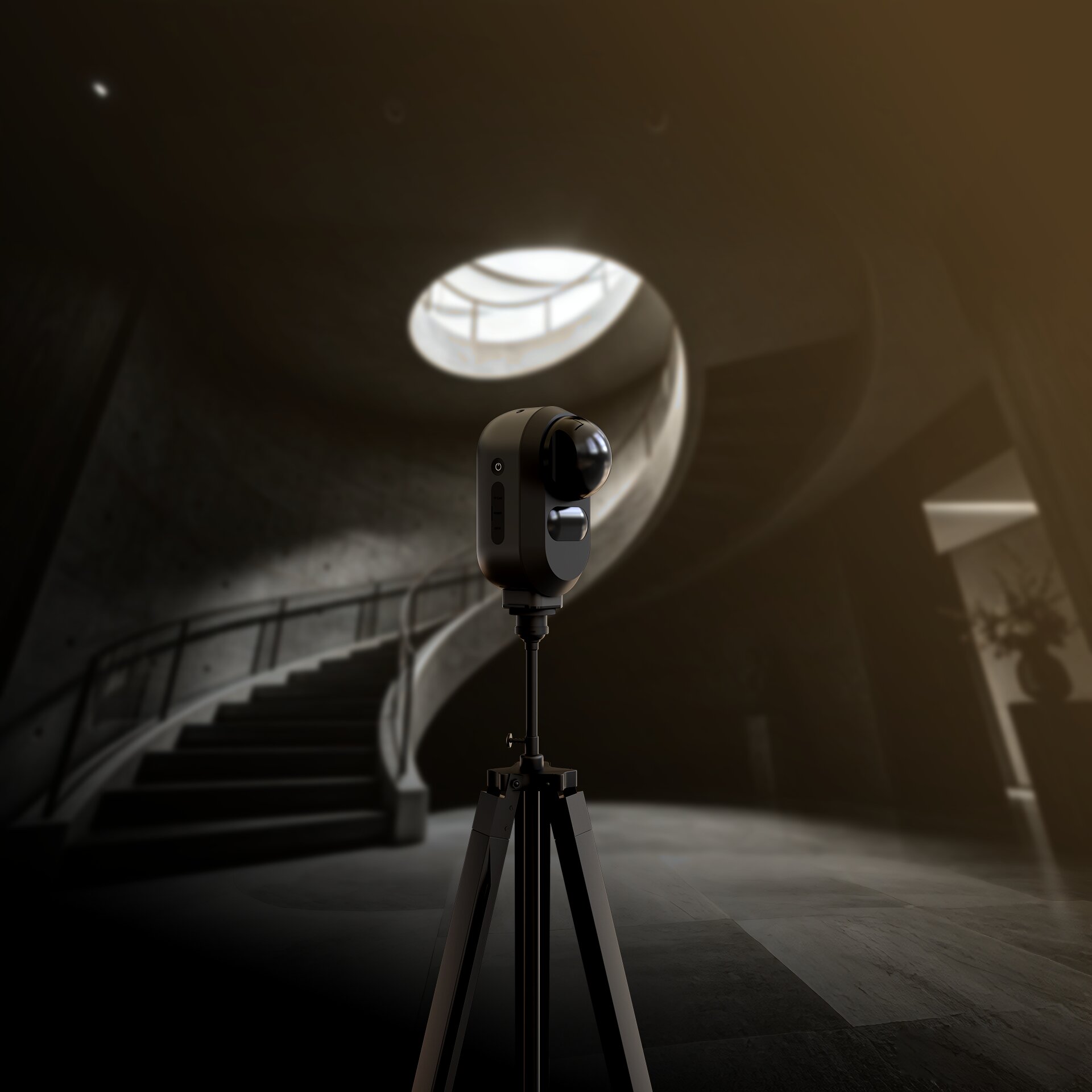
Featured image shows the 3DMakerpro Owl 3D scanner on a tripod, ready to scan. Image via 3DMakerpro.







